I love autumn! The colors, the crisp cool air, fields of pumpkins, harvesting the bounties of summer both tangible and intangible. But, I live in South Texas, where fall colors are found mostly on the artificial maple leaves I drape over my fireplace mantle and crisp mornings mean a welcome drop in humidity and somewhat cooler temps, but not exactly the fall I crave. It is hard to find a field of pumpkins. So, this seemed like a great opportunity for a road trip to visit my brother who lives at the foot of the Rocky Mountains in Colorado. It is a long drive – over 860 miles – and a slow but steady increase in elevation from 650 feet to 6,000 feet above sea level. The change is gradual. The prairies are vast and the sky endless. It takes about 9 hours for the mountains to appear on the horizon line and almost ten and a half to reach them in Raton, New Mexico, where they all of a sudden loom large as we ascend Raton Pass and cross into Colorado.
We chose to make the drive in a leisurely fashion over two days in October. I had lots of time to anticipate hillsides dotted with gold-leaf aspens, low humidity, and maybe a pumpkin patch or two as we drove across miles and miles of Texas prairie. I have often made this drive in summer, which is hot, dusty, and seems featureless. This time it looked more interesting. Perhaps it was the slant light of fall which made the sky look bluer and the remaining crops greener. Whatever it was, I saw a particular beauty that I don’t remember seeing before. There was a windmill farm that stretched for miles, white sentinels against a greying sky.
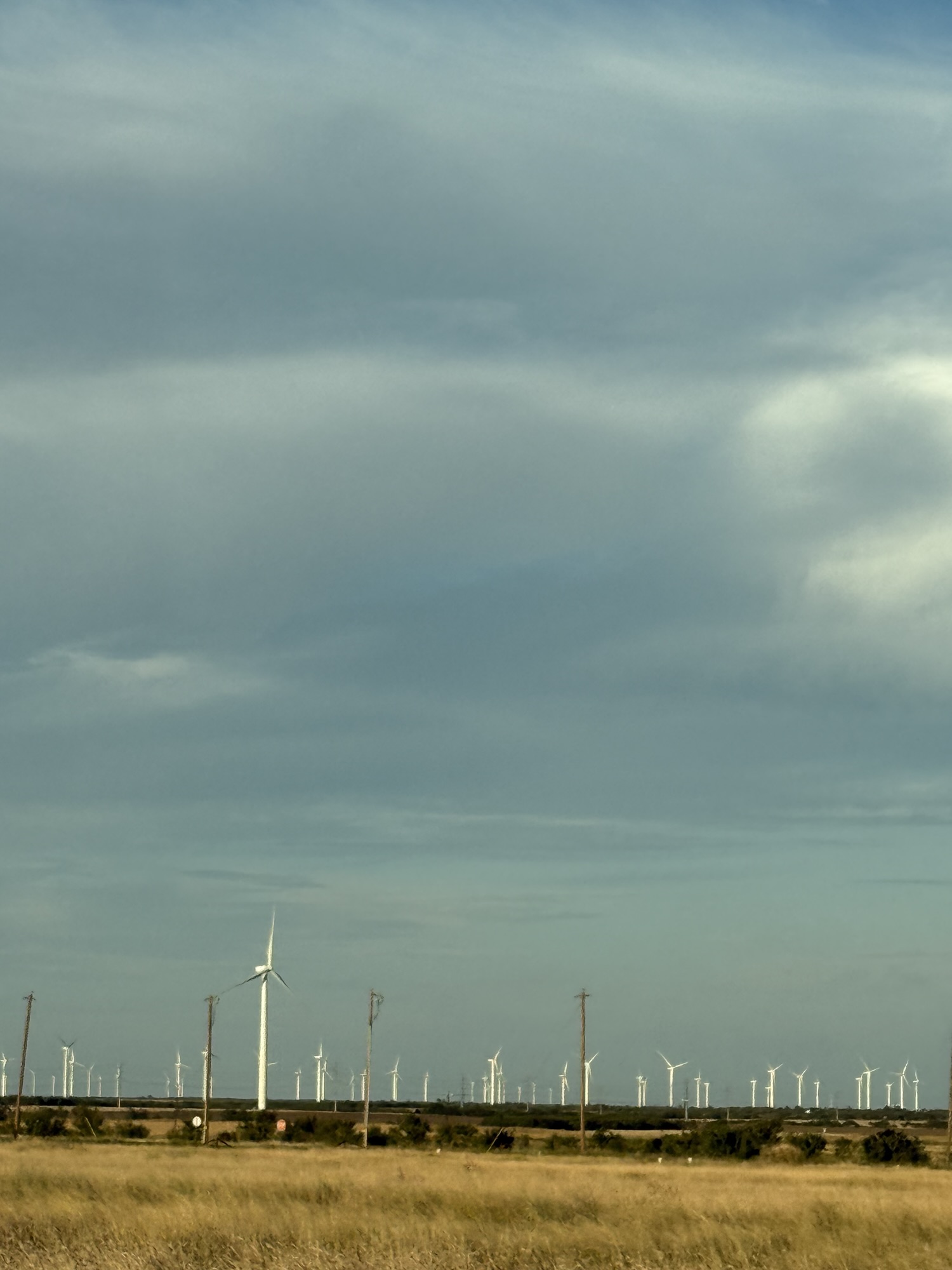
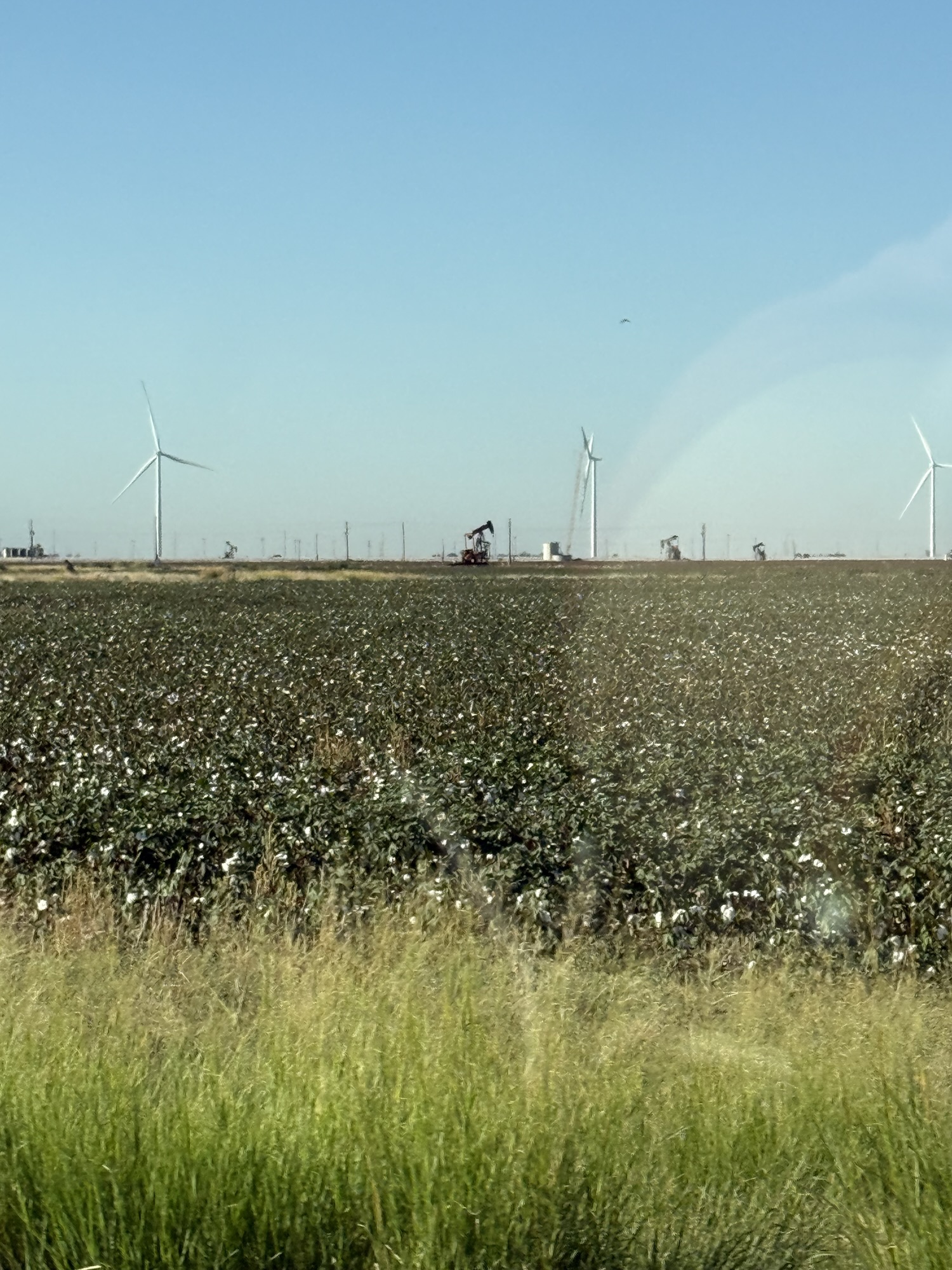
It was interesting to see oil pump-jacks occupying the same space as windmills – two very different energy sources.
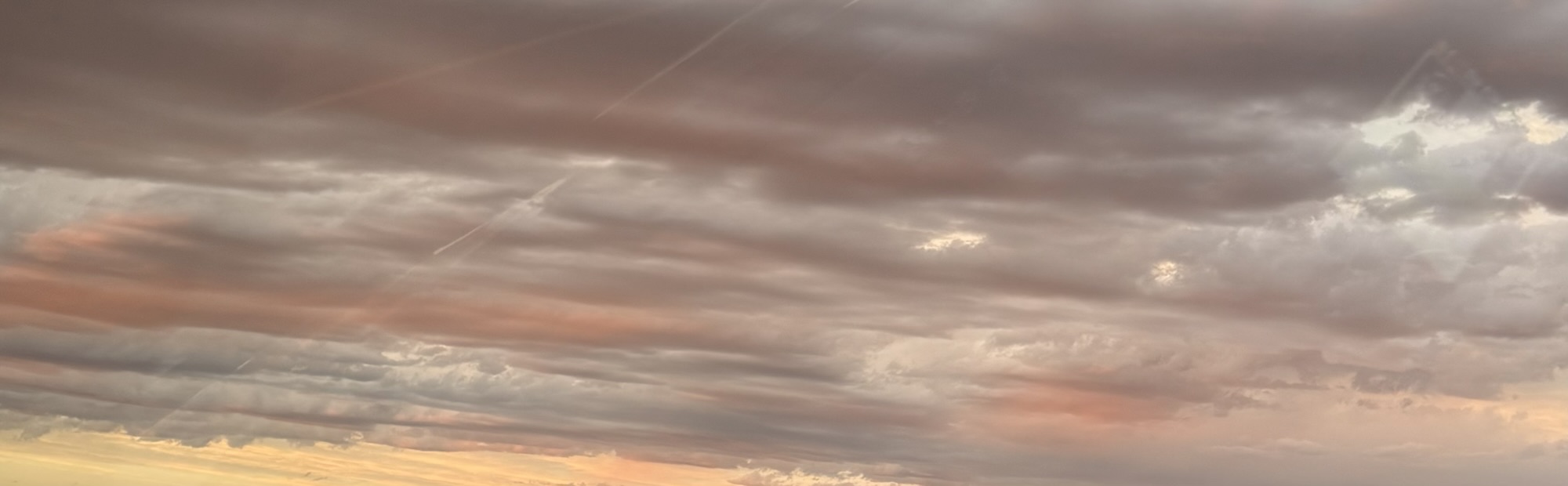
Sunset was amazing! It did not photograph well from the fast-moving vantage point of my window – there is much more subtlety here – a bluish cast to sun rays, many more variations of pink and yellow, the wide spread of it pver the plains.
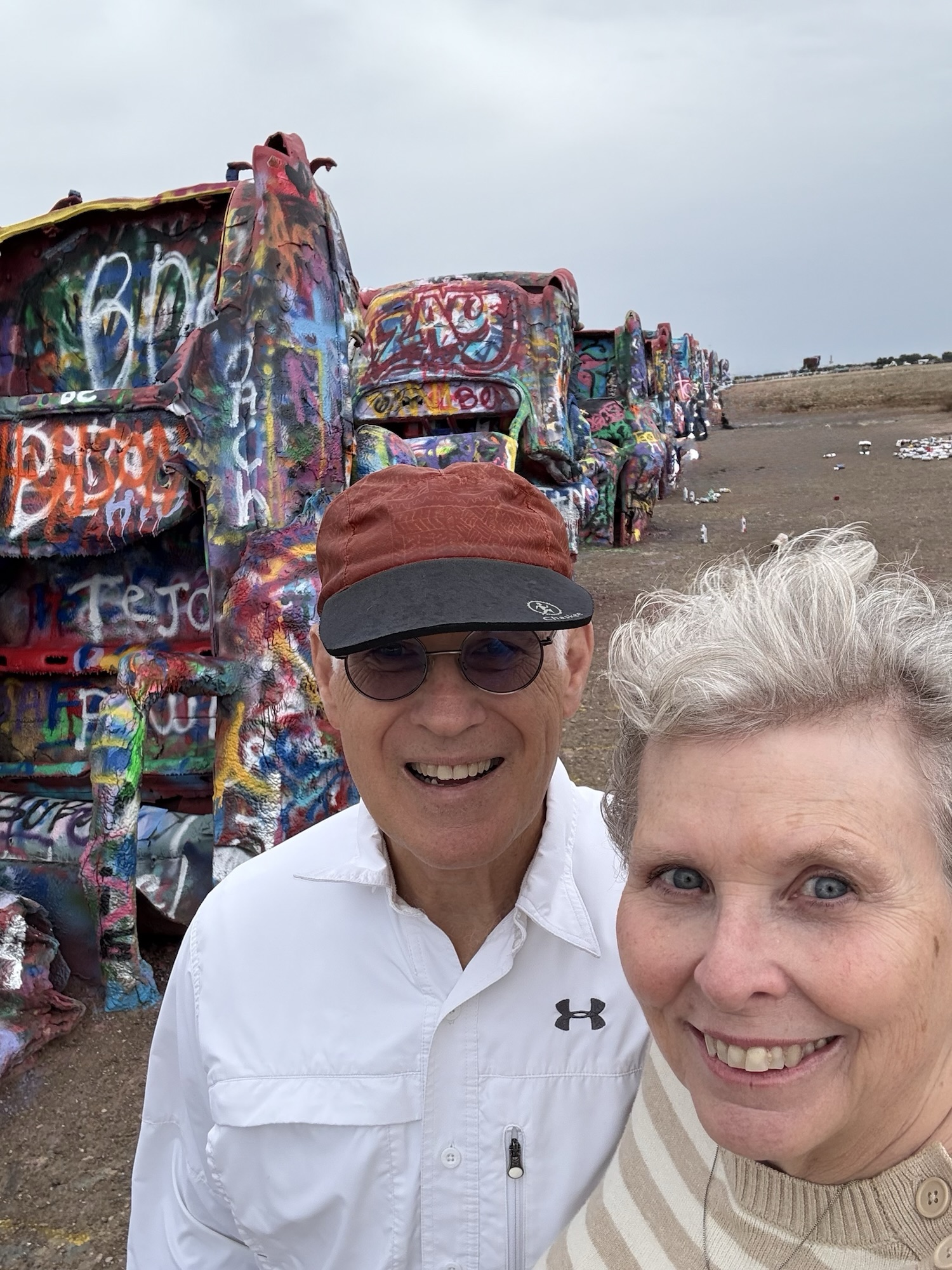
We stopped at Cadillac Ranch – an art installation from the ’70’s along I-40 outside Amarillo. 10 cadillacs arranged by tailfin progression, have been planted nose down in a row like menhirs. They quickly invited graffiti which somehow has turned into a “thing” – people stop here not just to see the cars, but to paint them. Over the years the layers have evolved into geological formations of flowstone and stalactite. It is fascinating.
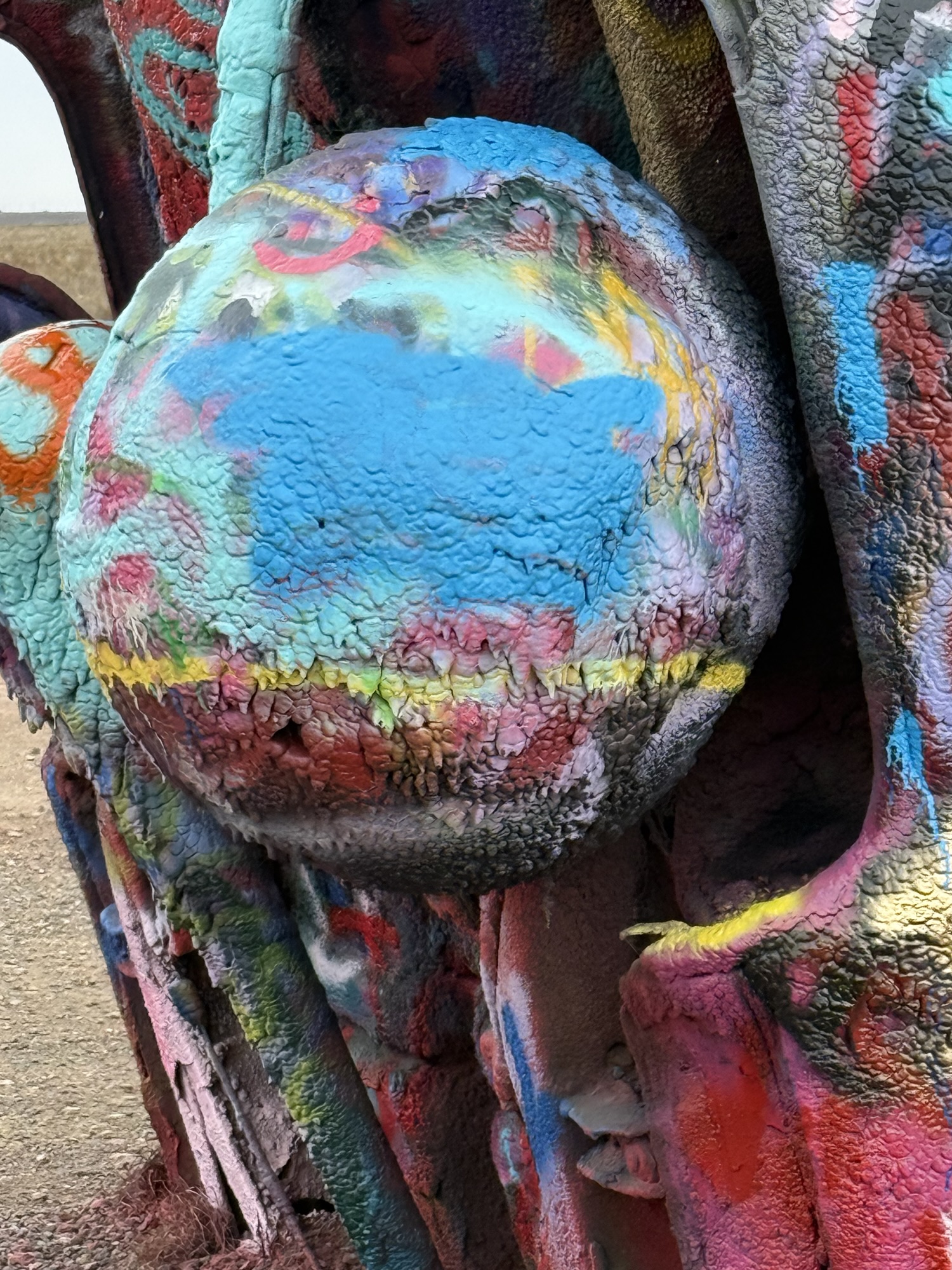
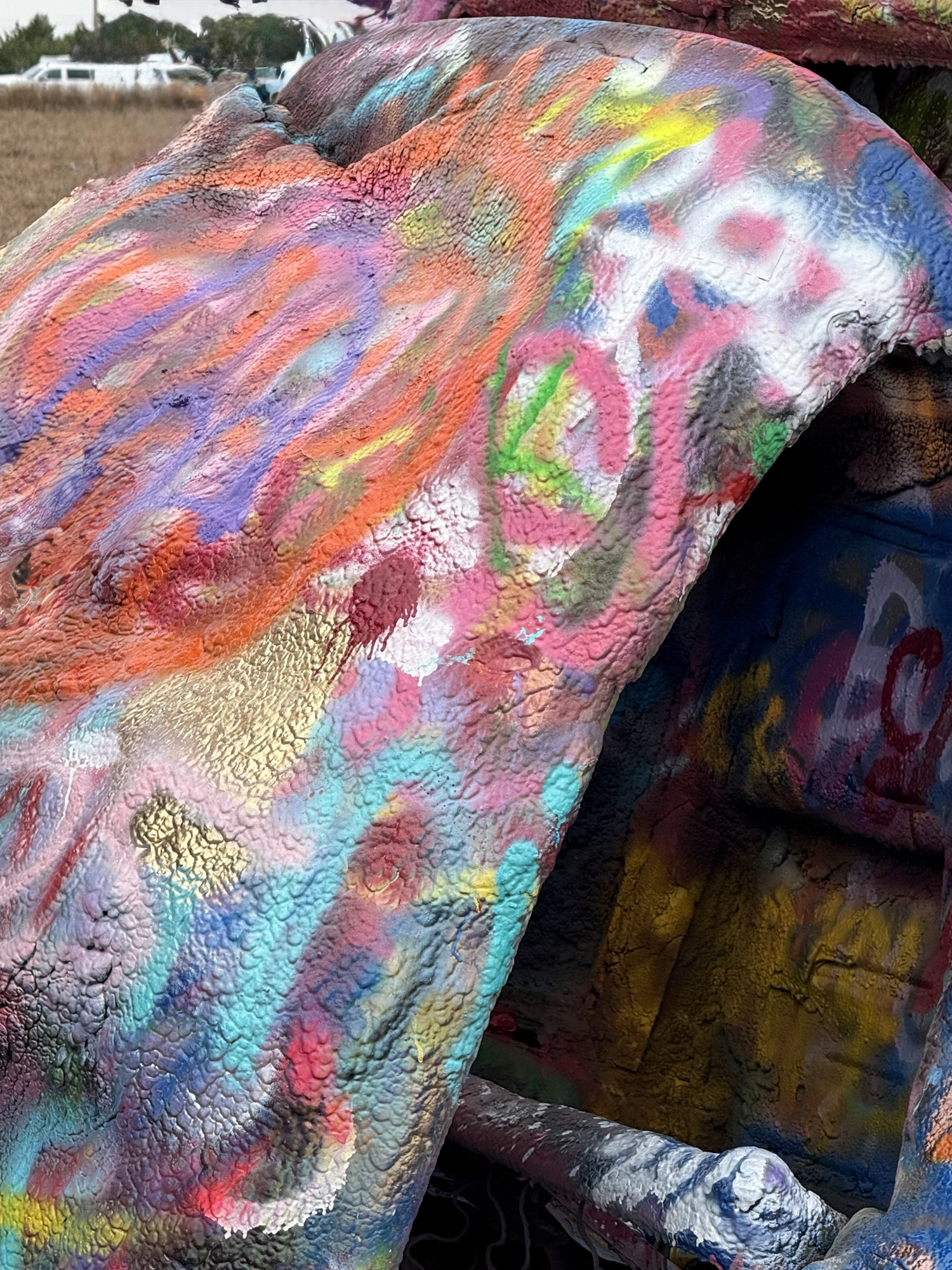
Moving past Amarillo and the Texas Plains in to New Mexico, the land begins a gradual tilt upwards. Cinder cones and eroded volcanic slopes, remnants of the volcanic past of this region, appear. Antelope graze or bound along, clearing barb-wire fencing with ease. A purplish smudge appears on the horizon, resolving into the section of the Sangre de Cristo mountains that straddle Northern New Mexico and Southern Colorado. After a day and a half of mostly flat driving we turn to the North and head up Raton Pass, 7,834 feet). It winds through the mountains, and we begin to see the fall colors for which we have been hoping. As quickly as we rise from Raton, we descend into Trinidad, Colorado, and then continue on our way towards Colorado Springs.
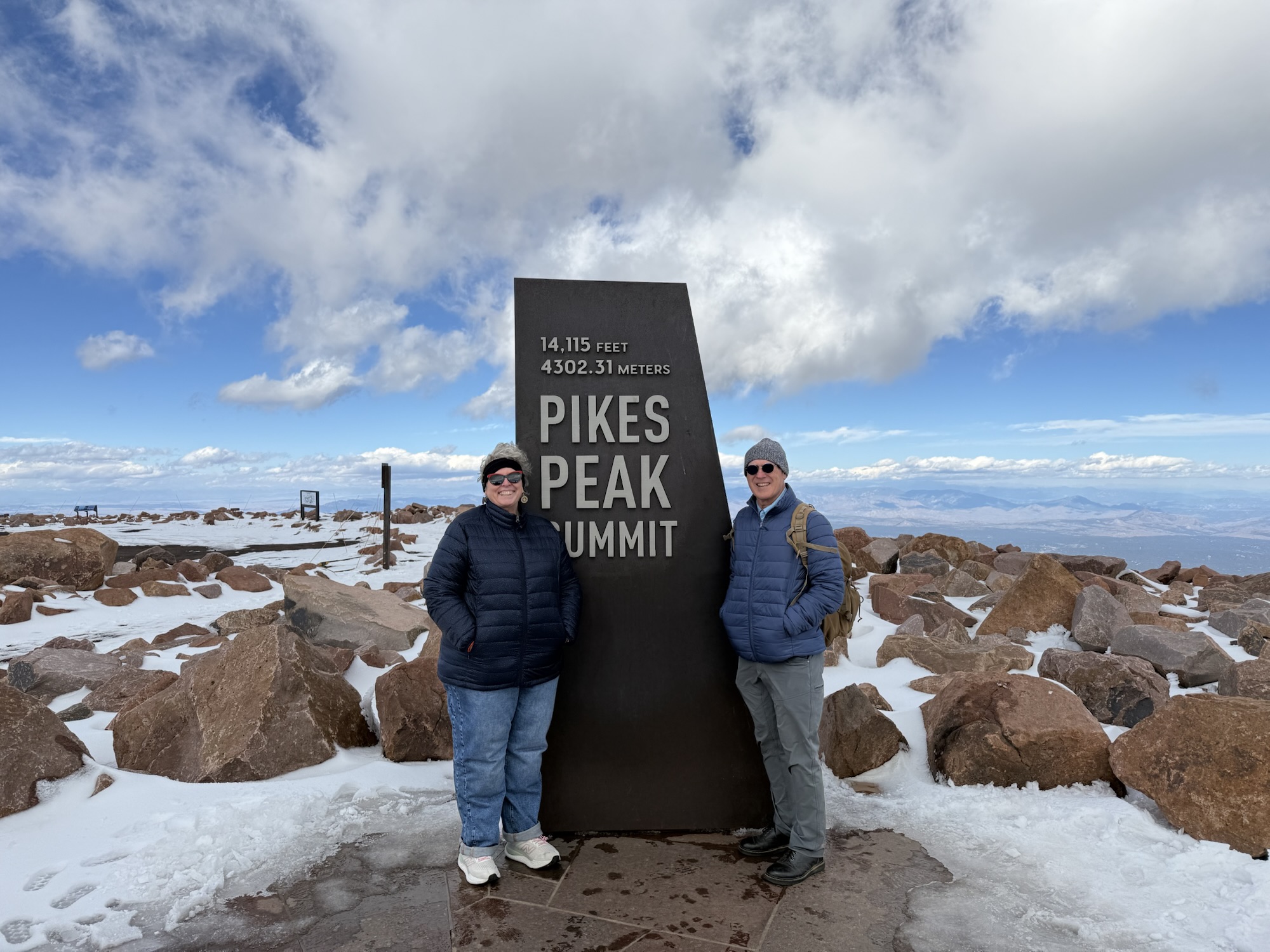
I grew up at the foot of the Rocky Mountains, and took as a matter of course the looming presence that defined the skyline to the West, juxtaposed against the Kansas plains to the East. Now that I live elsewhere, and even though I know what to expect, the sheer mass and height of the peaks catches me off-guard. The mountains are marvelous! We decided to make an excursion to the top of Pikes Peak, 14, 115 feet. When I was younger the official height was 14,110 feet, but was changed as geologic surveying became more precise. Also, there was no “Sasquatch” here – we knew he belonged to the Pacific Northwest. Perhaps he has migrated, as there is Sasquatch stuff everywhere… even a sign on the Pikes Peak Highway!
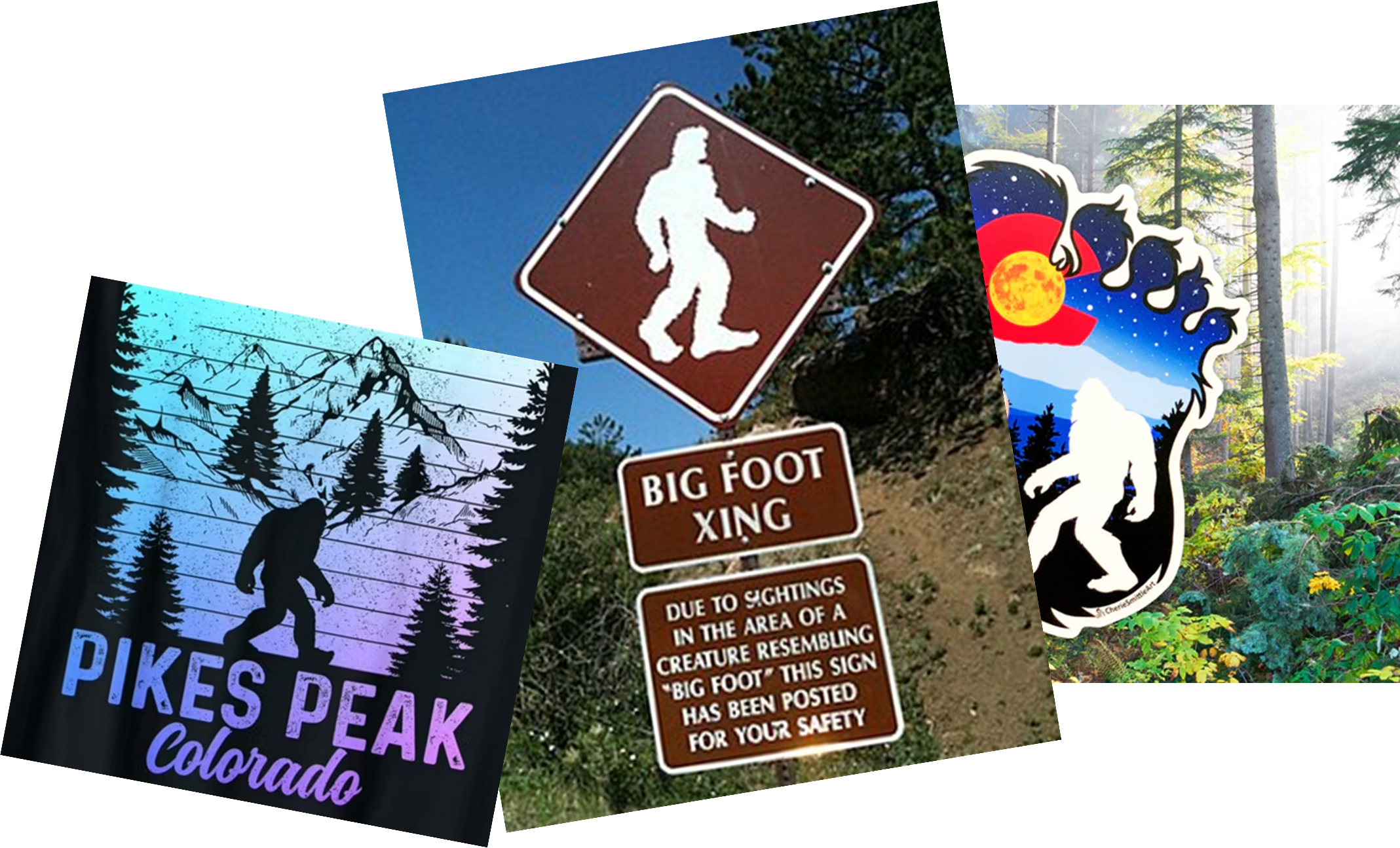
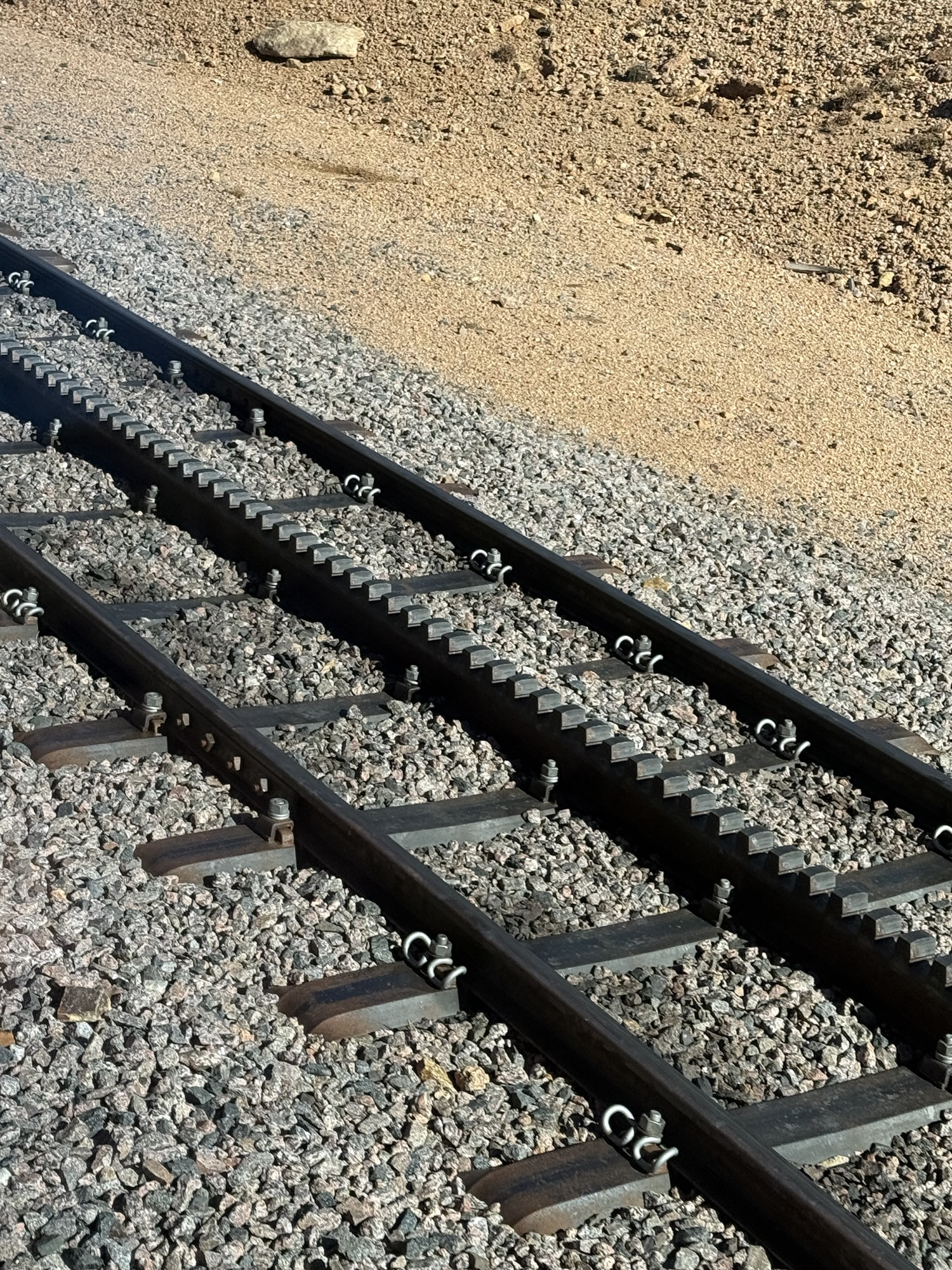
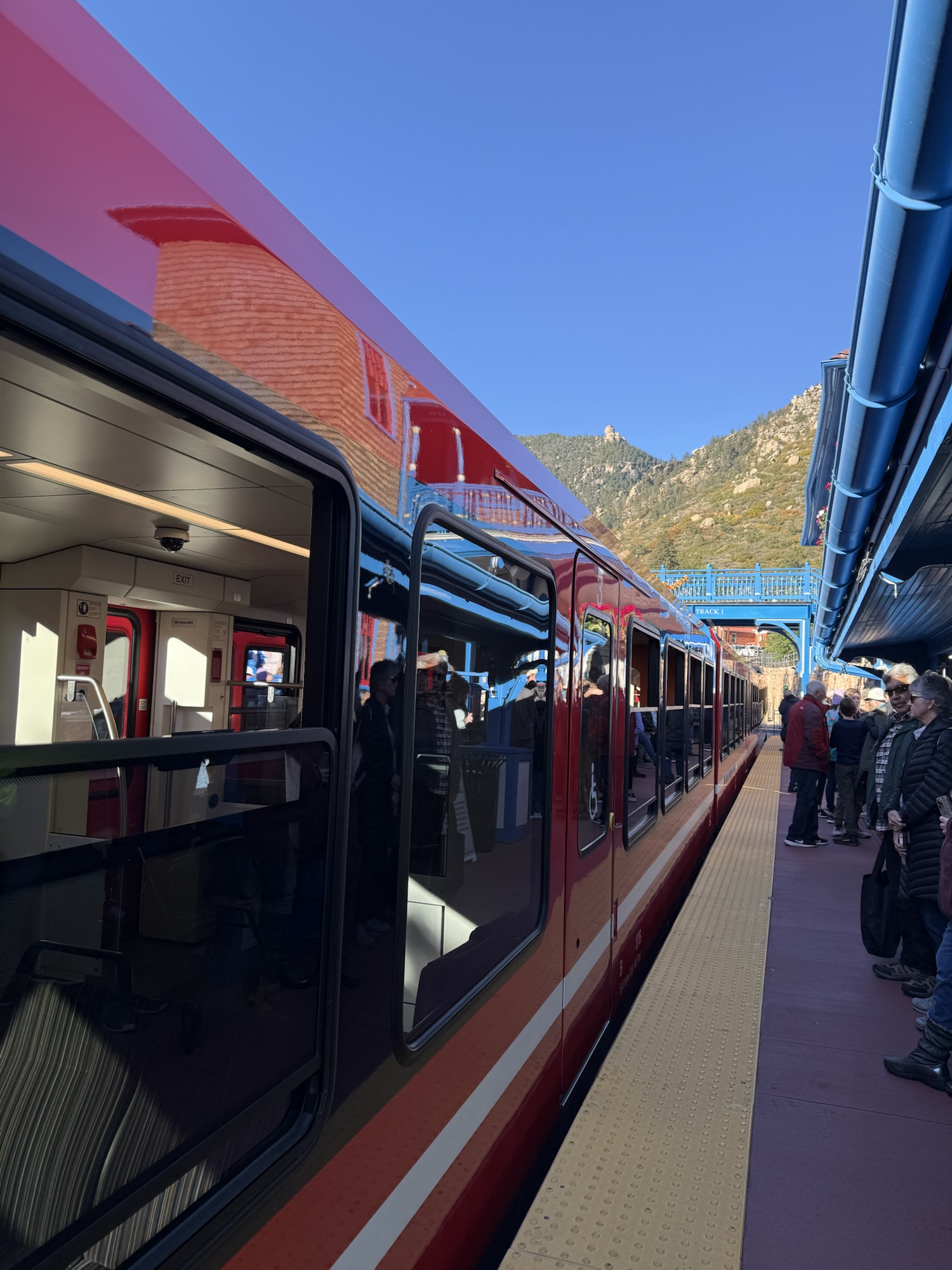
We sprang for tickets on the Manitou and Pikes Peak cog railway. Quite a fun trip and lots of time to take in the scenery, wonder about the technology that has been in place for this railway since 1891, and take notes for future writing – quick notes in my pocket journal because I didn’t want to miss the spectacular views!