9/11

Where were you when the towers came down? That’s a common question on this date. I was on the floor of our quarters in Mannheim, Germany, my husband stateside for required Army training as I scrunched against the couch, arm clutching our dog to my side as I watched the events unfolding on TV. It seemed so incomprehensible, and yet there it was. And there I was, sorrowed and uncertain about what had just been unleashed.

I had a similar experience today as I visited Los Alamos, a key site of the Manhattan Project which resulted in the development (and the eventual deployment) of the first nuclear weapon. I am a child of the Atomic Age. I grew up with air raid drills and the threat of a nuclear winter. I know about the Enola Gay, have seen the films that show the bombing of Hiroshima and Nagasaki. But, until today, I had never seen what those bombs, Fat Man and Little Boy, actually looked like.
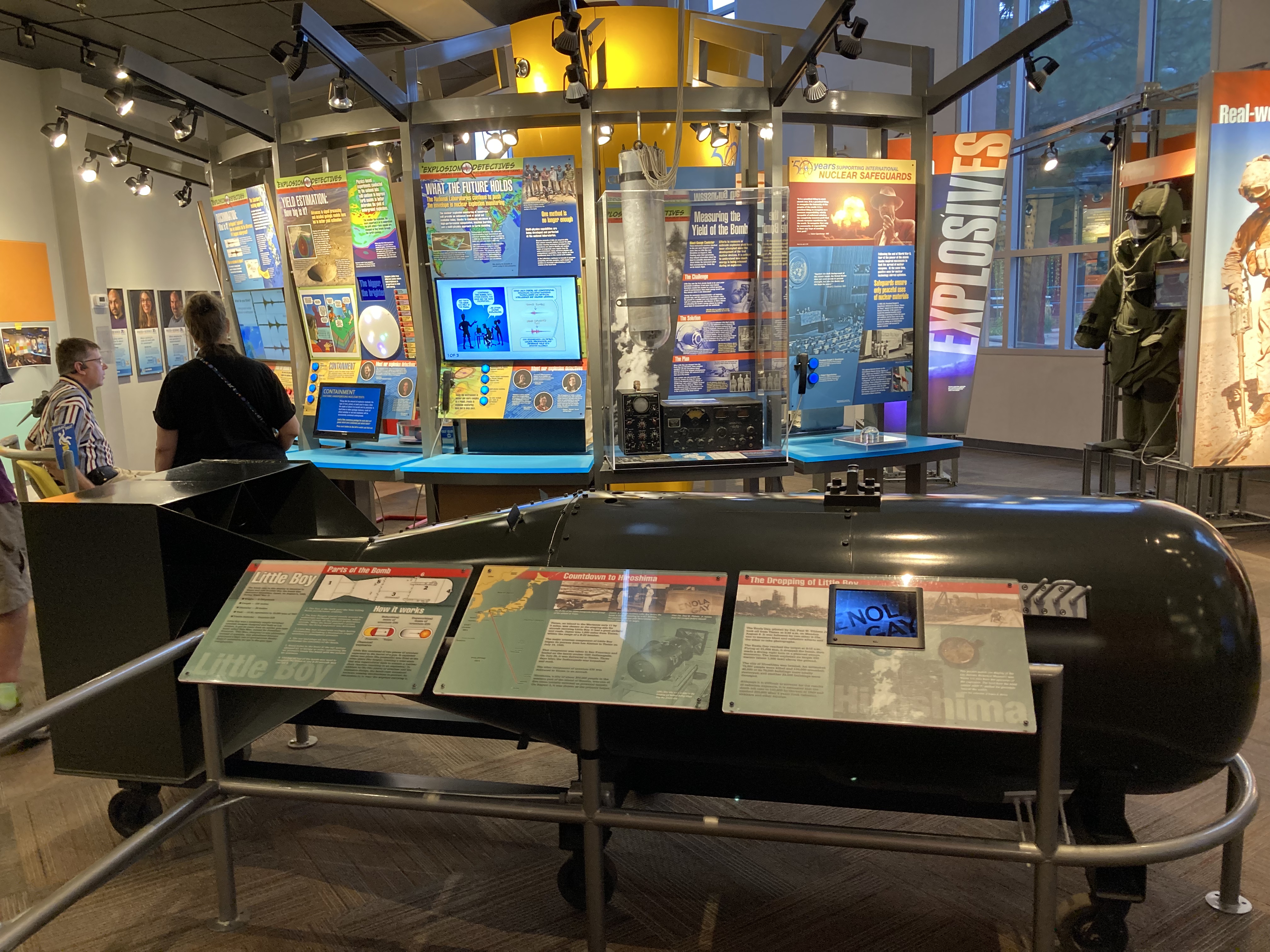
A full-scale replica of Little Boy on display in the Bradbury Science Museum, Los Alamos, New Mexico.

Little Boy, the bomb that was dropped on Hiroshima on August 6th, 1945, was 120 inches long and 29 inches in diameter. Other than it’s weight (9,700 lbs.), it could fit into a cargo van. I expected it to be bigger, to look more ferocious. It is hard to fathom that this was the cause of such catastrophic destruction.

After falling from the Enola Gay for 43 seconds, Little Boy detonates 1,968 feet above Hiroshima, 550 feet from the Aioi Bridge. Nuclear fission begins in 0.15 microseconds.

0916:03 (8:16:03am in Hiroshima, one second after detonation)- The fireball reaches maximum size, 900 feet in diameter. The mushroom cloud begins to form. As temperatures on the ground reach 7,000 degrees Fahrenheit, buildings melt and fuse together, human and animal tissue is vaporized. The blast wave travels at 984 miles per hour in all directions, demolishing over two-thirds of Hiroshima’s buildings in a massive, expanding firestorm. 80,000 people are instantly killed or grievously wounded. Over 100,000 more will die from the bomb’s effects in the coming months.

https://www.nps.gov/articles/000/the-atomic-bombings-of-hiroshima-and-nagasaki.htm
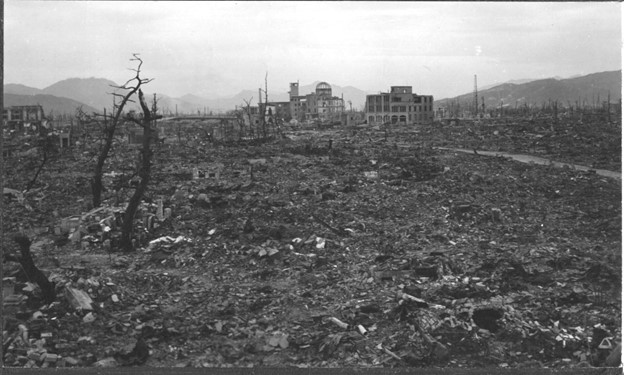
This seems so incomprehensible. Once again, I am sorrowed and uncertain about what we are capable of unleashing. I understand that human nature leads us to conflict, that there are real dangers, and real enemies that aggressively seek to destroy. Defense is a necessity. But I also understand that war is a terrible game we play with human lives, terms like “acceptable loss” and “collateral damage” linguistic masks for the unspeakable. I long for the day when we can move beyond our inclinations to harm one another, when [we] shall beat [our]swords into plowshares, and [our] spears into pruning hooks: nation shall not lift up sword against nation, neither shall [we] learn war any more. (Isaiah 2:4). That day may be a long way off. Perhaps it will never come. But it just might be possible, and so I will continue to hope.

Family Ties

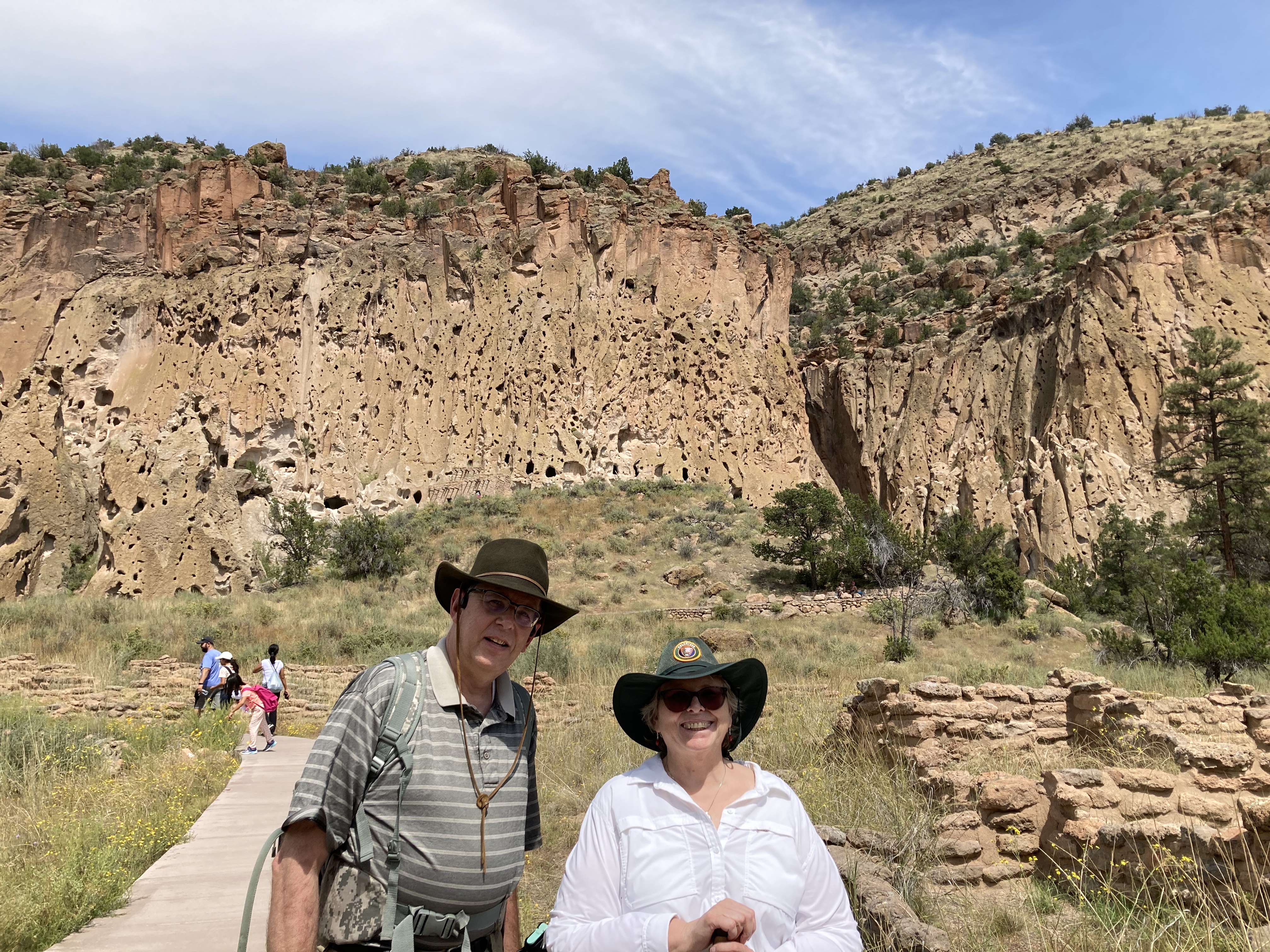
This weekend my brother Dan and his wife Linda came to visit me here in Bandelier (sorry Linda – I didn’t get a picture of us).

My brother and I at the Tyuonyi village, in front of the cliff dwellings.

Dan and I haven’t been here together for decades – I think I was about nine and he was three. Before we moved to Colorado, our family came here often because, as I mentioned in an earlier post, my family has ties to Frijoles Canyon and Bandelier. My grandmother’s first husband was Edgar Rogers, the first park custodian assigned to Bandelier in June of 1932. She lived here with him in small, primitive quarters and served as an Honorary Custodian Without Pay. That means exactly what it sounds like – this was an unofficial park designation often extended to wives of official custodians – we call them rangers today – who worked at a variety of jobs in the parks for free. Despite the lack of remuneration, she relished this role. She quickly became acquainted with Eva Frey who operated the lodge here in the canyon, enjoyed her developing friendships with park employees, and learned all she could about the history, flora and fauna of the canyon. One of her favorite duties was leading guided tours of the ruins.

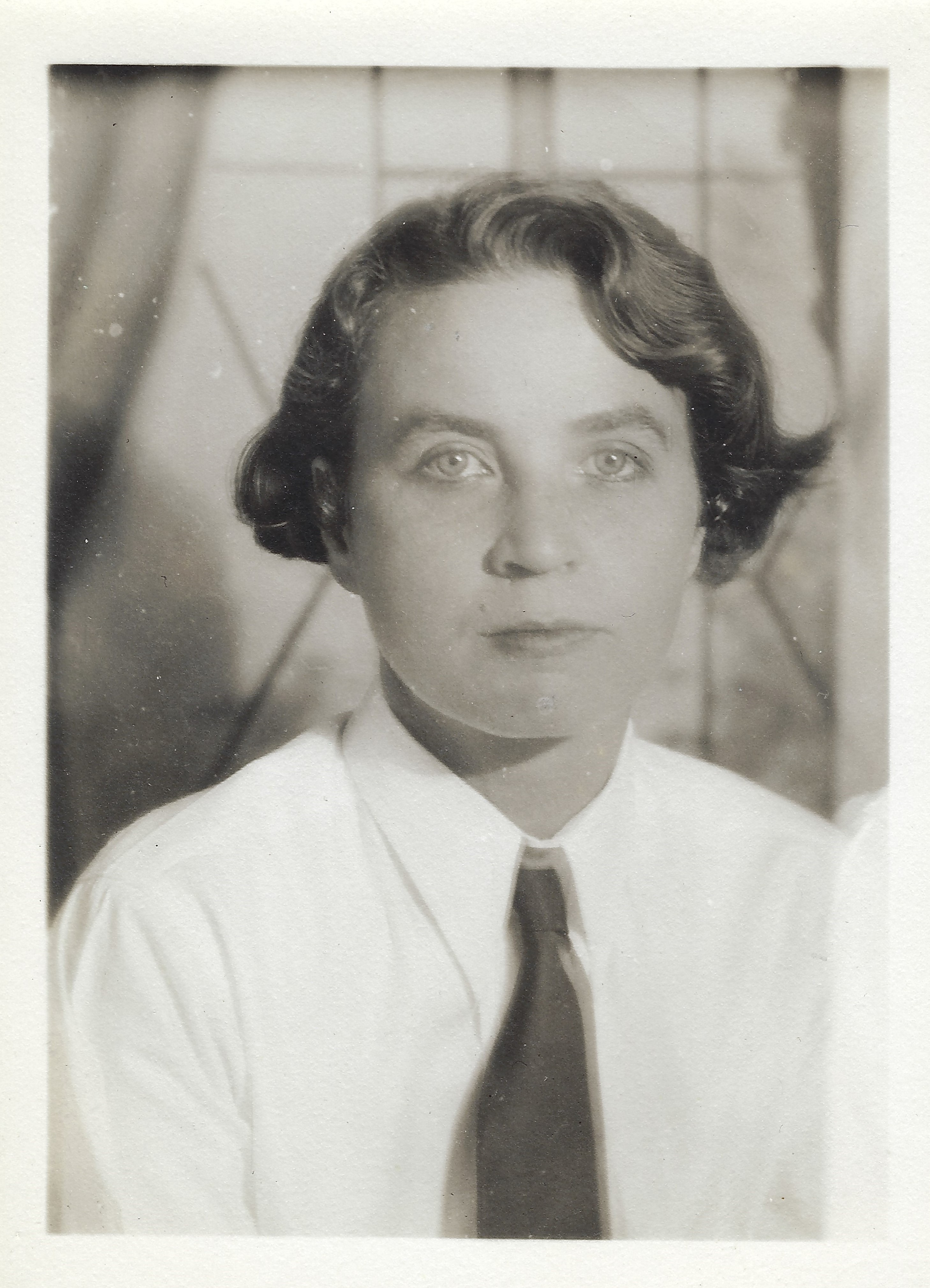
Gay Cook Rogers, circa 1933, in a park uniform

In the fall of 1933, Edgar died by suicide. Gay remained for a time at Bandelier, taking over many of Edgar’s duties. After Gay left Bandelier she returned often to visit Eva who became a life-long friend.

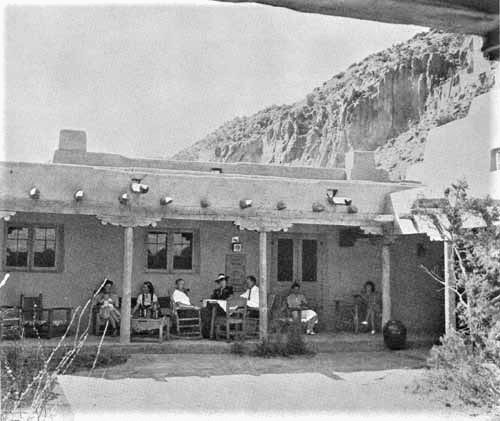
My grandfather, Richard Lovald, is the man in the rocking chair on the left. My grandmother is on the far left, and the baby she is holding is my mother. This is the Bandelier Lodge courtyard around 1938. This photograph was later used in a promotional brochure in the early 1940’s.

It followed naturally that we would make Bandelier a regular destination, staying in the lodge or camping across the creek. Eva, her head tilted just a bit to the side, would greet me as if I were a proper adult guest which made me feel very important. In the mornings while it was still cool, my father would walk with me to the ruins. Sometimes my grandmother would come too, and explain what I was seeing and why it mattered.

Though the lodge is no longer open to the public, the structures have been carefully preserved and look much the same as they did when I was small. So too, the ruins have changed little, except for some further excavation and constant preservation measures against erosion and many visitors. Being here is a step back in time. In moments of quiet reflection, I can hear Eva’s voice welcoming us to this space between honeycombed canyon walls, the fresh evening breeze cooling the lodge room in summer, or logs burning in the curved adobe fireplace filling it with warmth and the spice of pinon in winter.

Fires are no longer allowed in the rooms. Other than my brother, the people who made this place feel like home are no longer with me. I like to think they still visit here though, conversing with the Ancient Ones, their voices a gentle murmur slipping through the window screens as I drift off to sleep.

More information about Honorary Custodians Without Pay can be found in this excellent article: https://www.nps.gov/articles/000/two-for-the-price-of-one.htm, where I learned much more about this harrowing time in my grandmother’s life than she ever shared.

Photo of Gay Cook Rogers courtesy of author’s family collection

Lodge photo courtesy of Bandelier NPS archives. Link to the Bandelier CCC Historic District brochure, which has wonderful information about the lodge and the work of the CCC here: http://npshistory.com/brochures/band/ccc-walking-tour.pdf

A Glimpse Into The Writing Life

I realize the tag on this site says “Dispatches From A Writing Life” which is a very idyllic-sounding sort of life to have. I also realize I have said very little about it, so here is a peek.

One of the ways I process experiences is to write them down in a journal. Sometimes my journal entries are clever and witty. Sometimes they are contemplative or insightful. Mostly they are things like what I had for lunch. But, whatever I manage to get on the page, the important thing is that I write something (I wish I had been writing the cost for a gallon of gas with each fill-up since January – that would be interesting).

When I arrived in Bandelier I was delighted to find a picnic table just outside my casita.

THIS, I thought, is a perfect place to write! It has a bit of shade and a lovely view of the canyon walls rising above the structures of the historic lodge. At sunset the escarpments, burnished with the last light of the day, are a rich ochre hue. At my first opportunity, which was after a very busy two days of orientation, meeting lots of new people, and stocking up on groceries, I was ready to relax into what would be my new ritual. I changed from hiking boots to flipflops. I gathered up my journal, my pen, and a fresh, ripe peach, traversed the few feet to the table, and sat where I had a perfect view of the sun-brushed cliffs. Yes! I said to myself, This is the writing life! And it was, except for one small detail….

Not this kind
THIS kind

They made it readily apparent that I was most UNwelcome. So now, my pen, my journal, and my peach join me at the end of each day as I write from the confines of my casita, screened windows and door open to the evening, but not the ants.

Cartoon ant and the other kind courtesy of clipart-library.com

People You Meet

One of the more interesting things I have been able to do with my time as an Artist in Residence is to hang out in various places in the park and chat with people. Visitors to Bandelier come from all over the United States and other countries. There is a rich mix of languages, cultures, and ages. There are individuals, families, couples, singles, tour groups, groups of friends, and reunions. So far I have met at least one of the following: school teacher, banker, doctor, software engineer, waiter, writer, flight attendant, store clerk, painter – house and art, bricklayer, college student, stay-at-home Mom, active military, veteran, first responder, fast food worker, veterinarian, taxi driver, retiree, and musician. In the coming days I am sure I will find even more diversity. Some visitors have planned their trip here for a long time, some are spontaneous visitors, and some happen upon this treasure by accident.

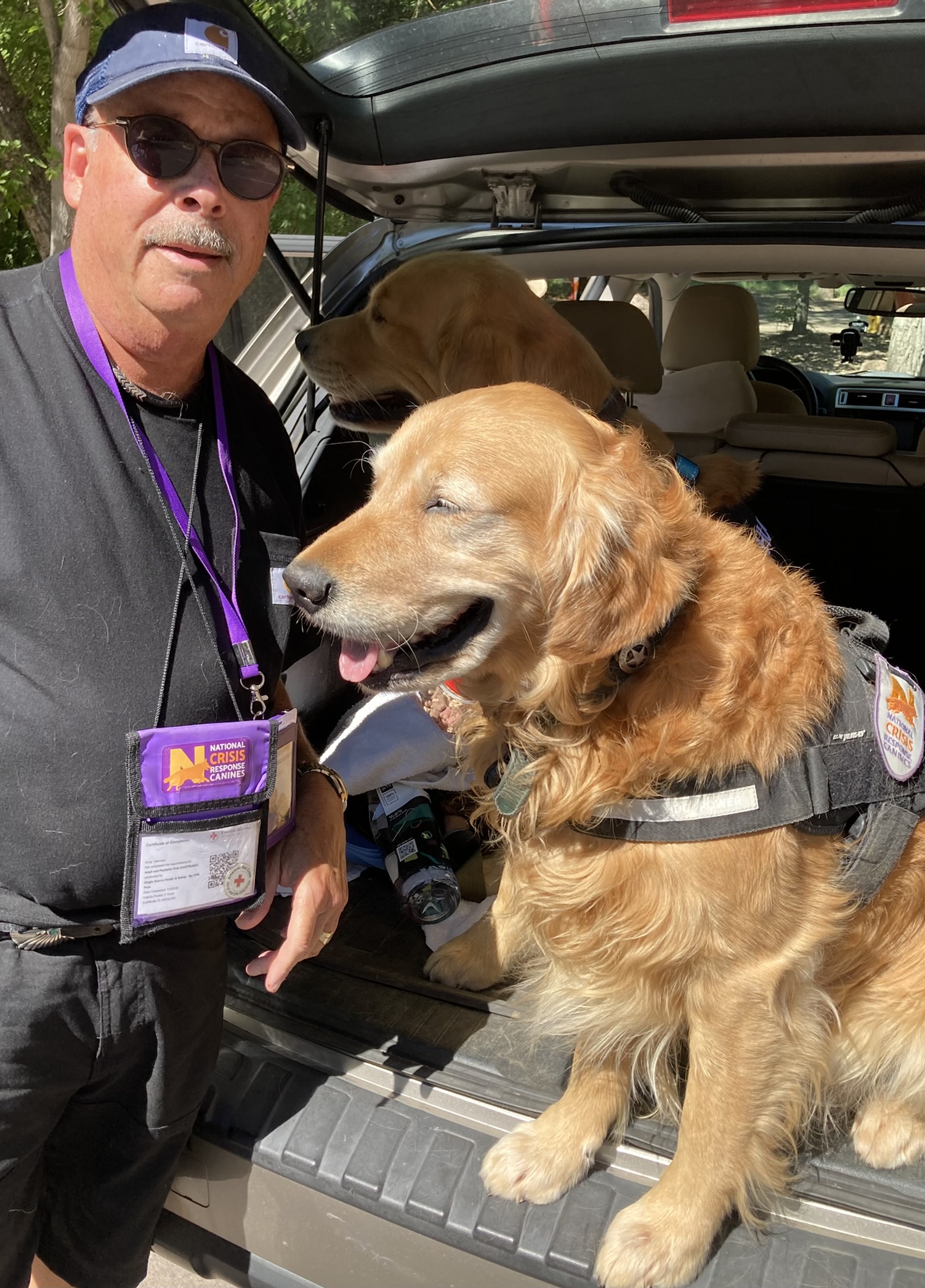
Today, I had the particular pleasure of meeting Cooper, Huck, and their handler Andy (This is not my best photo ever – these guys all look much better and more handsome in real life).

Cooper and Huck are Certified National Crisis Response Canines. Andy and Cooper have recently completed a harrowing assignment to Uvalde, Texas where they assisted in the aftermath of the tragic school shooting at Robb Elementary last May. Thank you Andy and your lovely dogs for the service you render. I hope your experience here brings you respite and a measure of peace.

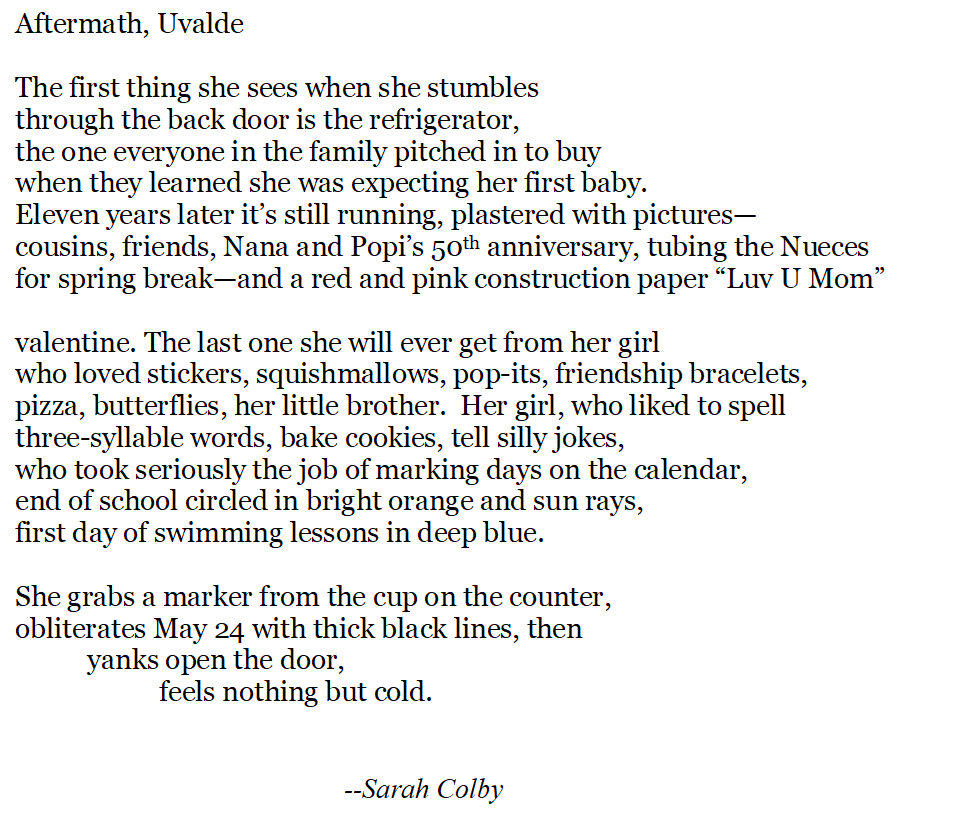
San Antonio, where I am from, is very close to Uvalde. To provide an outlet for our shared grief, the organization Arts Alive San Antonio created a space called Poets Respond to the Uvalde Tragedy. You can find the poem I am sharing here on their site, along with many others, at: https://artsalivesa.com/poets-respond-to-the-uvalde-tragedy-part-7/

Hatch Chile Season

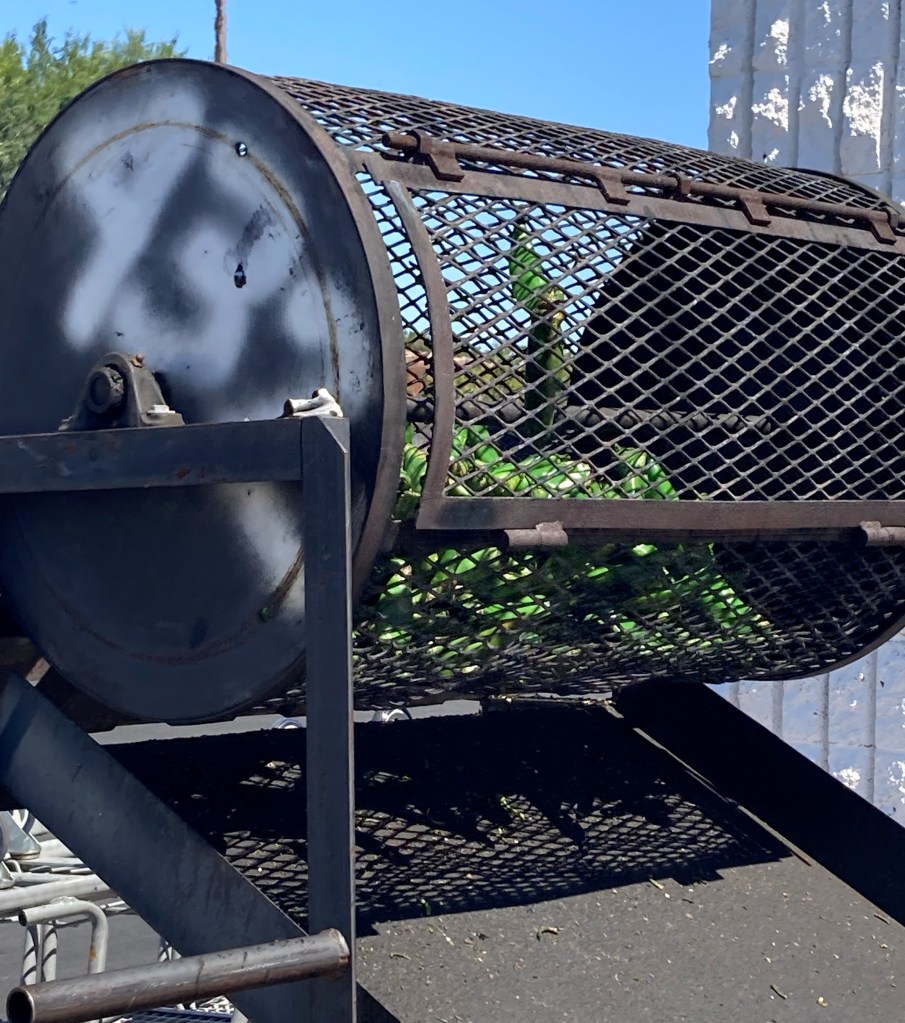
Hatch, New Mexico is famous for it’s chiles. It used to be that you had to go to Hatch, or someplace close by, to get them, but now they are widely exported. I think they are best in their home state, fresh roasted during chile season, which runs from early August to late September, which means I am here right in the middle of it. Roadside stands with drums of chiles rotating over flames, the distinctive, spicy aroma perfuming the air, wafting through my car window–irresistible! Of course I stopped and bought some.

Chiles in a roaster. There are flames, but the sun is too bright to see them. These chiles are about halfway to being done.

Here is a poem I wrote a while back involving Hatch chiles.

Safe and Secure

When the park is open for visitors, chatter and laughter combine with bird song and cell phone tones join the rasp and buzz of insects. The shuttle bus arrives every 20 minutes with a hydraulic sigh. A few cars come and go, doors squeak open and shut, and the bear-resistant trash receptacles clatter closed. Other than these sorts of sounds there isn’t a lot of noise in the canyon, so the reverberation of helicopter blades slicing air is unusual.

The helicopter was here to rescue a hiker from the back country. Most people, myself included, don’t think much about what makes national parks relatively safe places to visit. Often over-estimating our capabilities while under-estimating the specific challenges a park may have, we listen with half an ear to information rangers give us. And even if we do listen and we are prepared, accidents and the unexpected can still happen. Lucky for us, there are park rangers who are dedicated to keeping us as safe and secure as possible. Today I had the opportunity to observe the complex management of a rescue operation for a back-country hiker suffering from dehydration, a condition that can cause tiredness, confusion, muscle cramping, poor kidney function, and elevated heart rate. Severe dehydration can lead to shock, low blood pressure, and even death.

The first indication that something was wrong came via a report from other hikers leaving the back country. This immediately activated the response chain, which involves the law-enforcement segment of the ranger staff. These rangers have training in law enforcement and are all EMT’s. They are armed and can make arrests, but as sworn peace officers, their main responsibility is to help and protect. Because Bandelier is a small park, and located near the city of Los Alamos, the rangers here work in close cooperation with local law and fire departments.

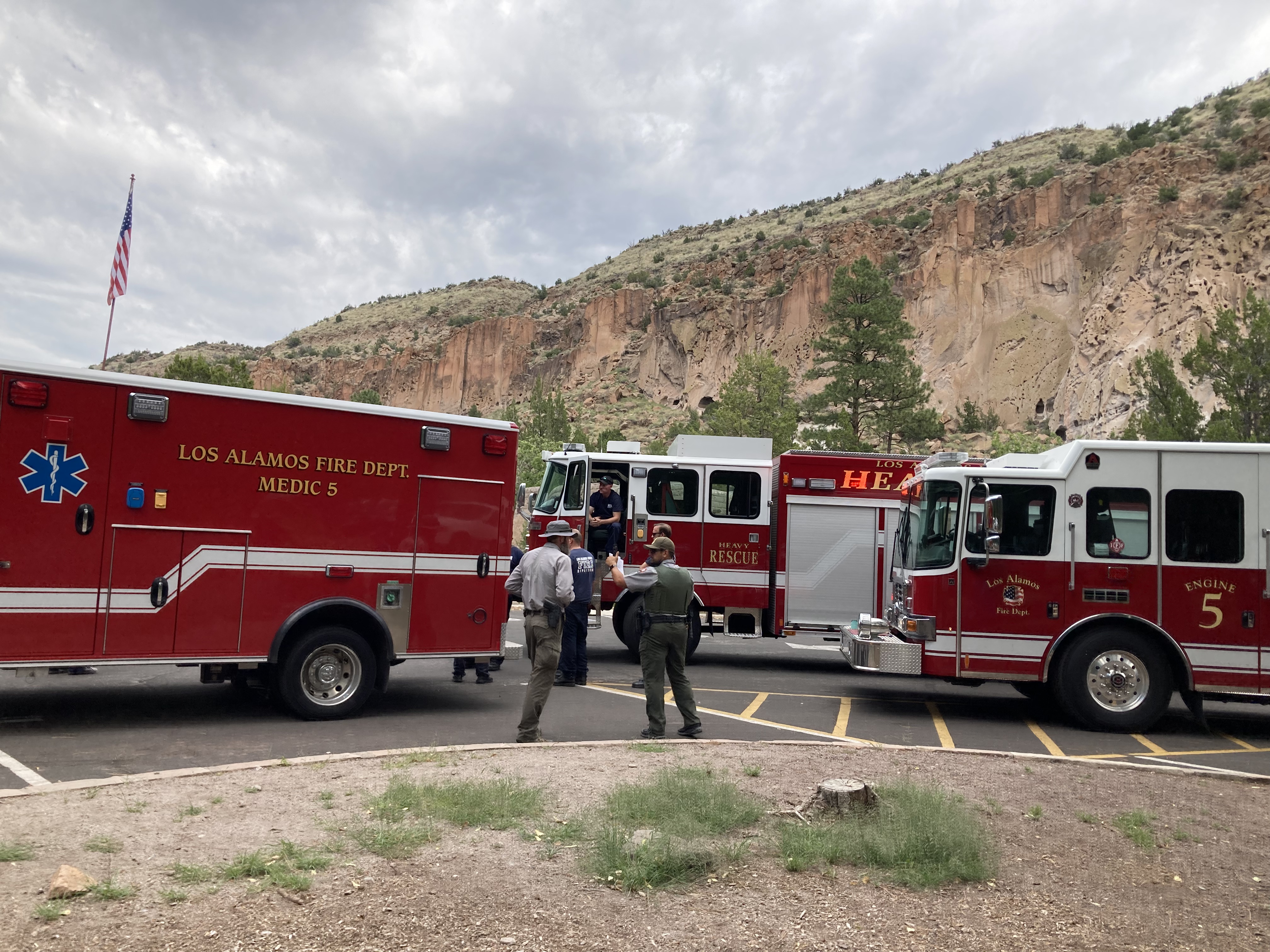
Preparations for the rescue were rapid and well-organized. The Los Alamos fire department dispatched an ambulance and a rescue vehicle. The terrain made it impossible to drive in , so a team was organized to carry medical supplies and a stretcher (litter) up the trail to bring the hiker down.

Bandelier rangers conferring with Los Alamos rescue.

Though I am sure it felt far longer for the person waiting alongside the trail, the team was efficient, reaching the hiker less than three hours after the initial report. In this case, it was determined that a helicopter would be the best way to extract the hiker. Hence the sound of the rotors this afternoon.

Unless they saw the vehicles or the helicopter, most visitors to the park were unaware of the events that unfolded here today. That is usually the case – law enforcement rangers go about their work with as little disruption to normal activities as possible. Rescue operations are only one (dramatic) facet to their jobs. They deal with park vandalism (sad), visitors who don’t pay entrance fees, run stops signs, light fires where they shouldn’t, drink too much, and other violations that pose a danger to the park or to others. They keep visitors, including me, safe and secure during our time at Bandelier. I’m glad they are here!

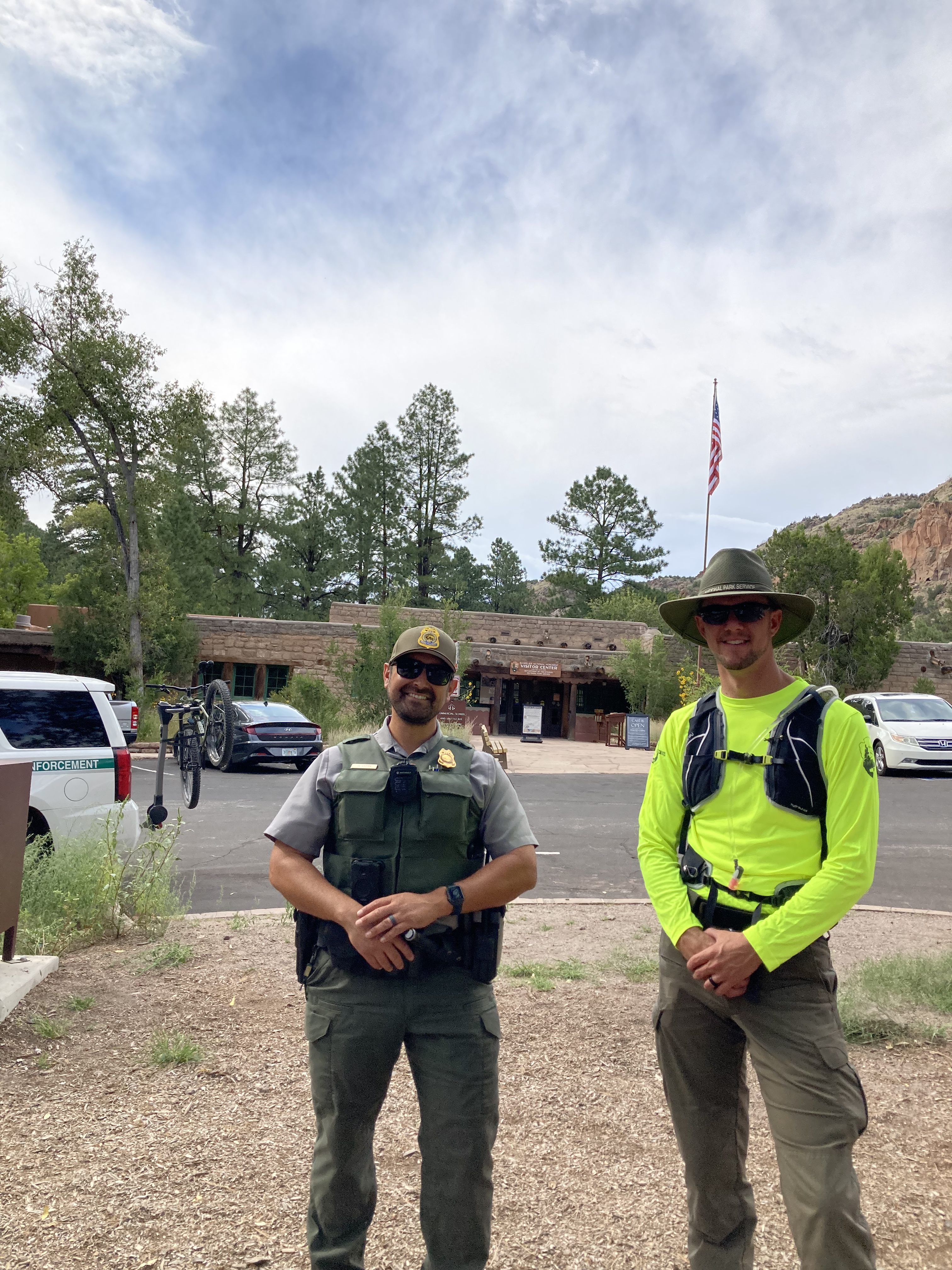
Many thanks to Mike Stetter (L), Will Sunderland (R) and Greg Drum (not shown – he was still on his way out of the back country) for taking the time to explain what they do and how they do it.

Hello!

It’s official! My time as Artist in Residence at Bandelier National Monument began today. After a somewhat harrowing drive (who would have guessed that after a long, dry Texas summer it would rain buckets and sheets as I made my way west) I arrived safely in beautiful Frijoles Canyon. Warm greetings and lots of information and support from the rangers and staff here made me feel welcome. They even unloaded my vehicle! (Did I bring too much? Yes – yes I did indeed bring too much…) As the first AiR since the COVID quarantines, I am looking forward to my time here – a month already doesn’t feel long enough to explore all the wonders that await.

My quarters. This is part of a wonderful lodge that was built by the Civilian Conservation Corps (CCC) between 1933 and 1941. Though no longer open for public lodging, it does provide housing for park staff and lucky official visitors like me. I am thrilled because there is personal history with this place – but that’s a story for later…
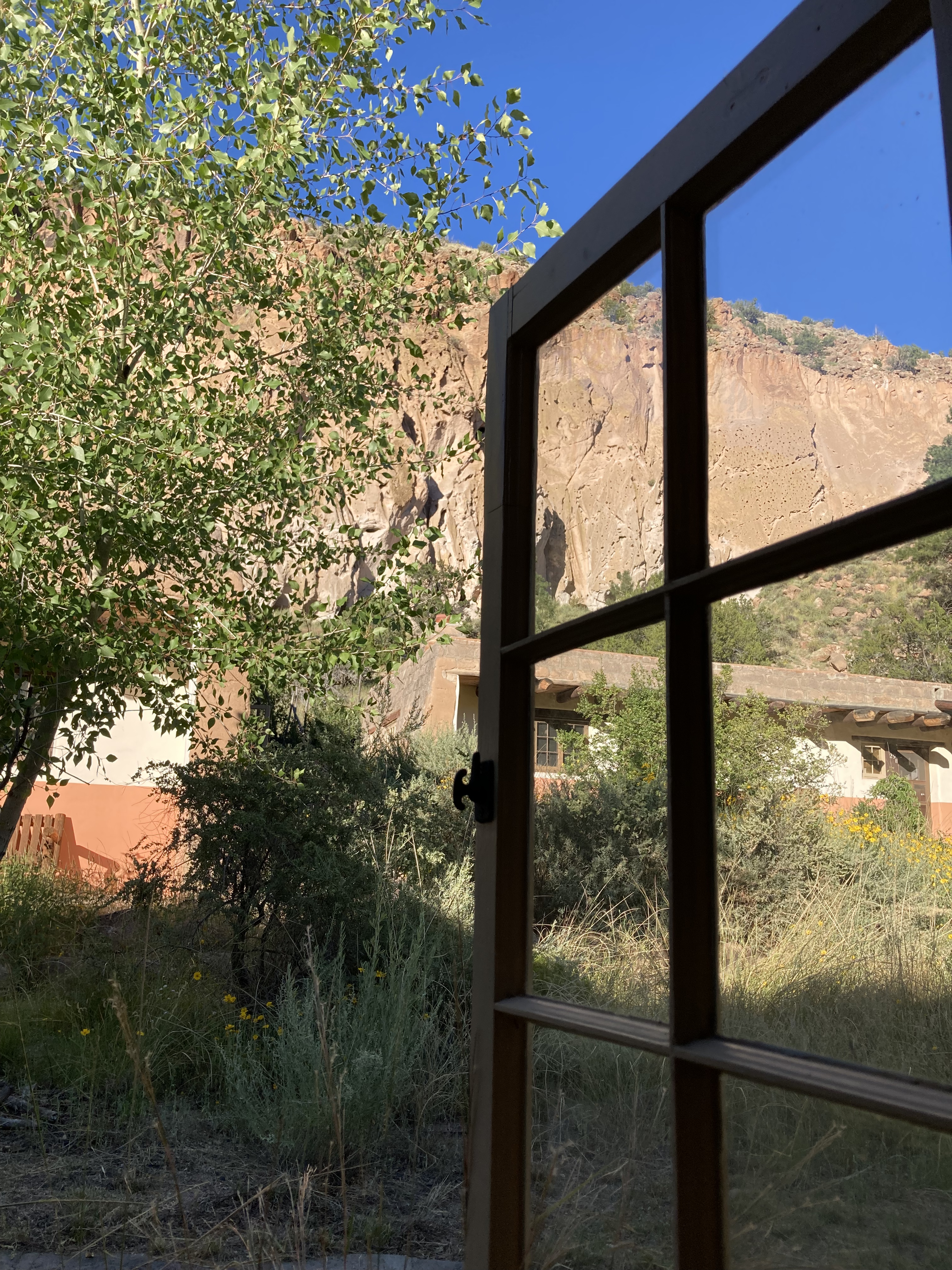
This is the afternoon view from my window. YES – the sky really is this blue!

After I settle in I will be back with more posts. See you later.