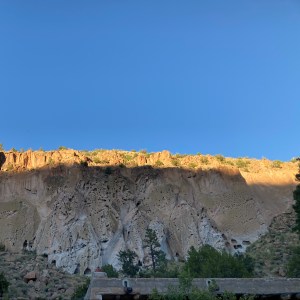
Three Journeys

Between the 1st and the 5th of April 2026, three notable events occur.  In this span of time we mark the launch of the Artemis II moon mission and central holidays of both Jewish and Christian faiths, Passover and Easter.  These events, though seemingly disparate, have something in common.  They all involve journeys into the unknown. 

The Passover story, where, through divine intervention, the Hebrew slaves were released from bondage to the Egyptians, is often celebrated as a story of freedom, but the exodus from Egypt is also a journey into the unknown.  An entire group of people sets out into a wilderness where they have never been, following a man, Moses the prophet, whom most of them have never met, who they trust to lead them to a promised land of milk and honey, free from oppression.

Easter is the culminating event of the story of Jesus Christ, the central figure of Christianity.  Despite a miraculous birth, Jesus spends the next 30 years living an ordinary life.  It is only in his last three years that he moves out of obscurity into the public eye.  Beleaguered by the ruling clergy, he gathers an increasing number of followers willing to risk the journey into a spiritual unknown.  His ministry culminates in his crucifixion and then his miraculous resurrection on Easter morning.

Artemis II is not the first moon launch – that was in 1968 with the Apollo 8 mission that orbited the moon 10 times before returning to earth.  It was followed in 1969 by the first lunar landing.  The last NASA moon mission was in 1972 – more than 50 years ago.  Astronauts have visited the moon before,  and this mission has been plotted and mapped to the nth degree.  But its trajectory will take the tiny capsule and its four crew members deeper in space than any humans have gone before, another journey into unknown territory.

These three events have other things in common – clouds, fire, and faith.  The Israelite’s way forward is marked by a pillar of cloud by day and of fire by night which they follow with faith that it will lead to the Promised Land.  Forty days after resurrection, Jesus, with a radiance like the sun, is lifted by clouds of glory into the heavens, leaving his followers to walk by faith instead of side by side.  Artemis II, with faith in math, science and engineering, was lifted on its own column of fire and glorious clouds as it, too, made its way heavenward.  What about us?  The ones who didn’t know Moses, who didn’t experience the mortal ministry of Jesus in the flesh, who are not and likely will never be astronauts hurtling through space.  How do we navigate the unknowns that await us?  In who or what do we place our faith? Where are our pillars of fire?  Our clouds of glory? What will we do when we find them

NASA photo, Artemis II liftoff April 1, 2026
Deluge and Drought

I spent most of the month of February travelling. The first trip was to Washington DC for a conference. I arrived just after a colossal January storm that dropped feet of snow followed by sleet and freezing rain. The landscape looked like amusement park fiberglass snow constructions – hard and smooth with a glittery sheen. The streets were thick with ice and very slick, narrowed by piles of displaced snow, and the sidewalks treacherous.

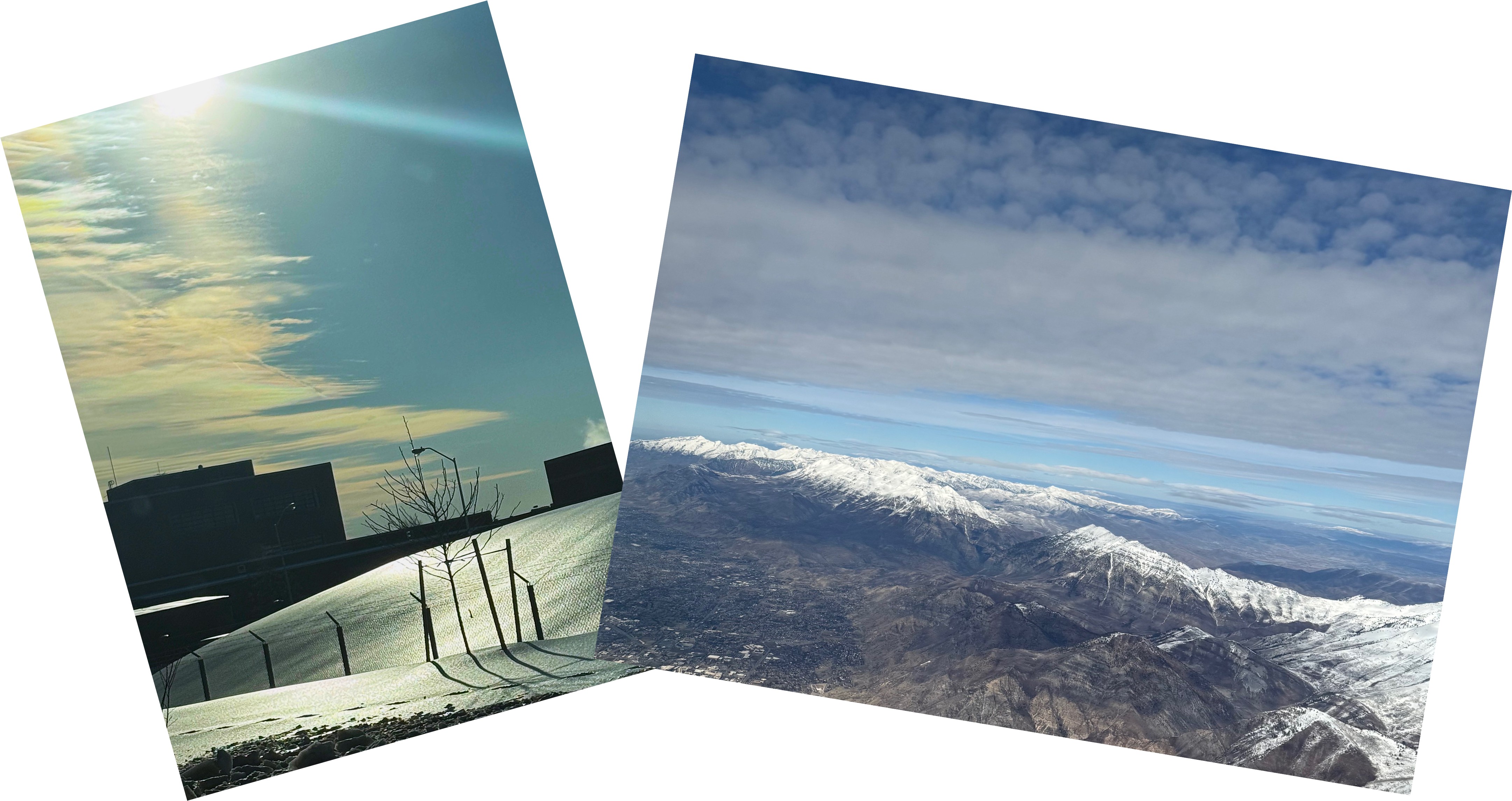
Following this trip, I went to Utah for my father-in-law’s funeral. Flying in to Salt Lake City from Texas takes a route over the Rocky Mountains. In winter the view through those small airplane windows is usually of thickly frosted peaks, valleys where rivers cut icy paths through snowpack, and ski lifts and runs criss-cross hillsides above teeming ski resorts.

But not this year. The snow was sparse, looking more like late May than February. Too much rock and pine, not enough white. Weather can be capricious. Fluctuating climate cycles seem indifferent to the havoc they wreak. Some places the wet soil groans under the weight of too much while in other places it is shriveled, cracked and desperately thirsty.

Life, too, can feel equally capricious. My father-in-law, for example, lived a long life – 93 years. He served in the Marines, raised a family, had a successful career which included the chance to work on space shuttle construction, and then retired and spent time hiking, advocating for environmental protections, and serving his church and community. It was a good life until the slow, cruel erosion of Alzheimer’s, which went on for well over a decade, his life piled around him in frozen drifts, his mind impassable. His death was a relief for us, knowing he was finally released from that implacable prison, our grieving having been done years before when he could no longer recognize his own son. His funeral felt like the long overdue remembrance for a man we had lost long ago.

In contrast, the loss of a dear friend was unexpected and unwelcome. Diagnosed with cancer a number of years ago, she was determined to shepherd her son through late adolescence and high school graduation, which she did with grace, joy, and time to spare. She continued to work at a job she loved from which she reluctantly retired only after the cancer recurred. Once again, her optimism and determination came in to play as she continued to focus her life on family, friends, and a collection of charming hats. Her prognosis was good. Her future filled with gardening, lunch dates, concerts, museums, and travel plans. Until, all of a sudden, it didn’t. She passed away the same week of my father-in-law’s funeral, a few days before her birthday.

Since I was already going to be in Utah the day of her birthday, I had planned to surprise her with gifts, flowers, and lunch at her favorite restaurant before flying back to Texas. Instead, I returned home, the unopened gift bag tucked in my suitcase. Ten days later I went back for her funeral. As such things go, it was good. For those of us who had been colleagues as well as friends, it was a reunion of sorts, a drawing together of parched souls around a well of tender remembrance for a woman we all cherished and whose absence we keenly feel.

The gift bag sits on my shelf now, the cracked soil of my grief not yet ready to give it up. Why some of us get more years than we need and others get far fewer is an unyielding mystery. It feels as capricious as weather, and impossible to predict. None of us are guaranteed a tomorrow. What we have is right now – this moment. What will we make of it?

Tell me, what is it you plan to do
with your one wild and precious life?
“*

*Mary Oliver, The Summer Day

Publication and A Reading

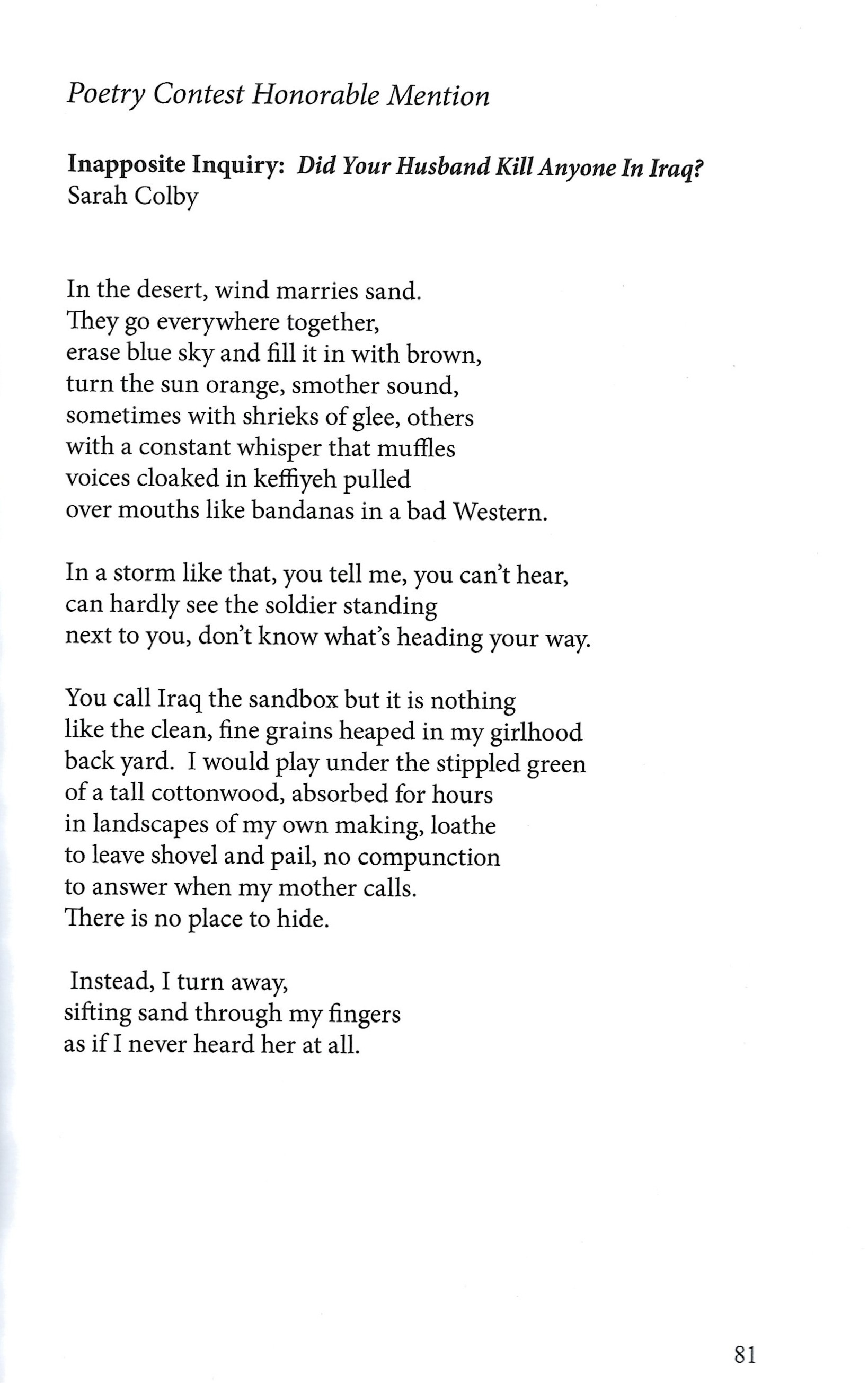
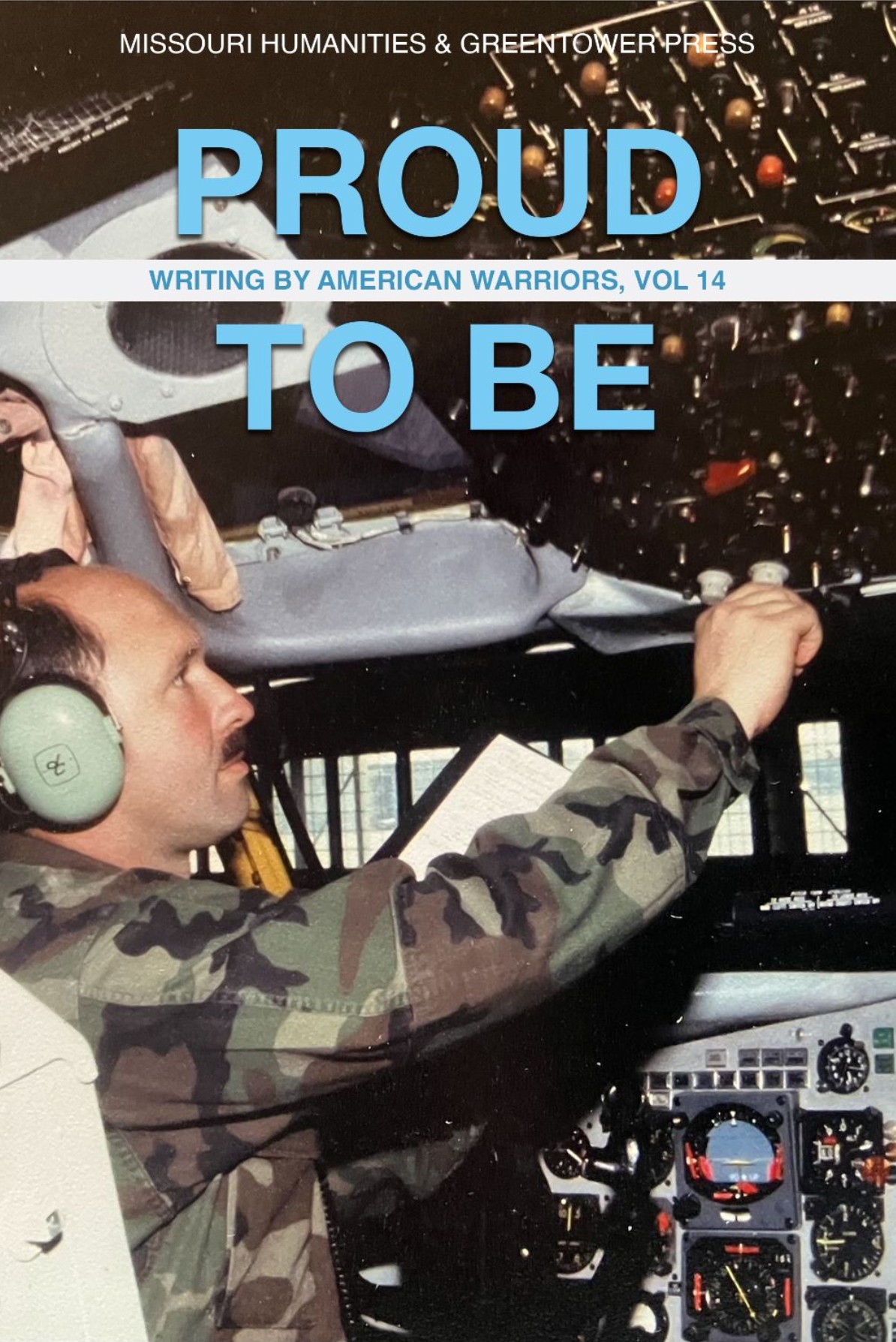
My poem, Inapposite Inquiry: Did Your Husband Kill Anyone in Iraq?, was selected for publication in Volume 14 of Proud To Be: Writing buy American Warriors. It also received an honourable mention. Many thanks to Missouri Humanities and Green Tower Press for this opportunity to be on the pages of this premier publication of military-themed literature.

There will be a free virtual reading from this volume on January 28th, 2026, 6:30-7:45 Central on Zoom. I will be reading my poem along with other contributors who will share and discuss their work. Please join in if you can. The reading is free but does require registration. You can do that here:

https://us02web.zoom.us/webinar/register/WN_Lhdu1vksRRulMxL55ZS35g#/registration

Hope to see you there!

Recommended Reading

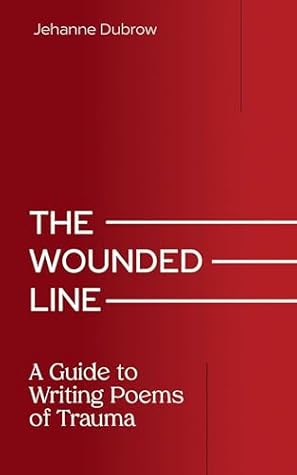
I have posted a review of this book on Amazon and Goodreads. I am posting the review here as well because I think it is an excellent resource, whether you are writing for yourself, mentoring, or teaching.

In her latest book, The Wounded Line: A Guide to Writing Poems of Trauma, Jehanne Dubrow provides an accessible, meaningful, and practical approach to the difficult challenge of writing about trauma, from the global to the personal.  The book is neither academic or clinical but it is clear that Dubrow has done her research in both of these areas. This, combined with her experience as both a stellar writer and a master teacher, give her latitude to present ways to explore trauma using the written word.  Each chapter gives a meditation/exploration of a way in which trauma can manifest, followed by well-chosen examples of poems, presentation of craft elements, and excellent writing prompts.  The book is easy to navigate and immediately applicable.  As a writer and teacher who works with Veterans, I have already put this book to the test with excellent results

December 31st

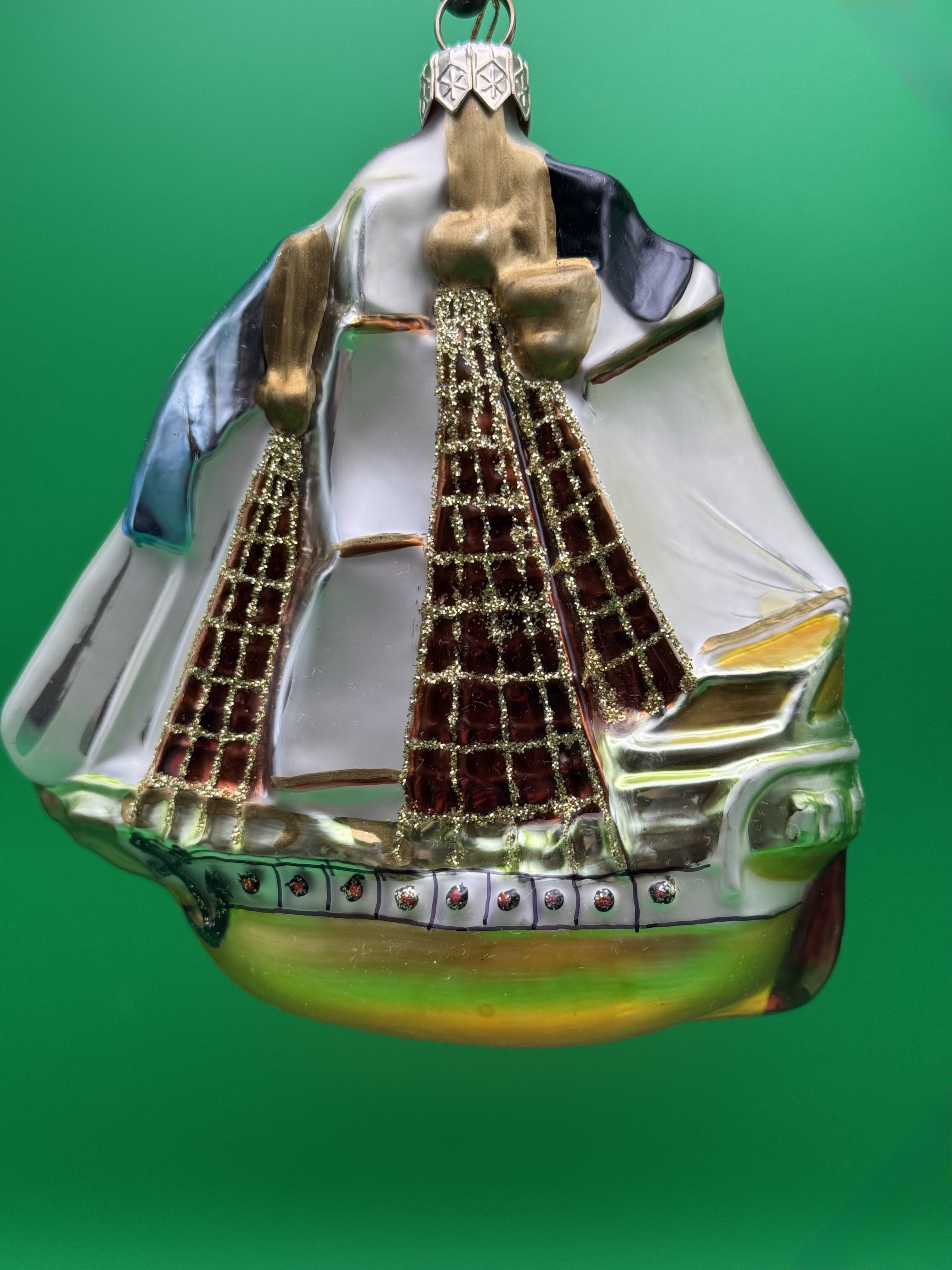
I hope you have enjoyed this brief journey of nostalgia and family history. For the last day of 2025 I chose this mercury glass ornament. It is one we picked up in Poland. Whenever I hang this ornament on the tree I think of a song that Layden composed back in the ’80’s. He found an antique volume of children’s poems and stories and set several of them to music. The Sea Gypsy is one that I think is fitting as we contemplate the new year that begins tomorrow. Listen to it here:

Where will this year take you? What are your heart’s desires? Where do you find wonder? For what does your soul thirst?

December 30th

Australia!

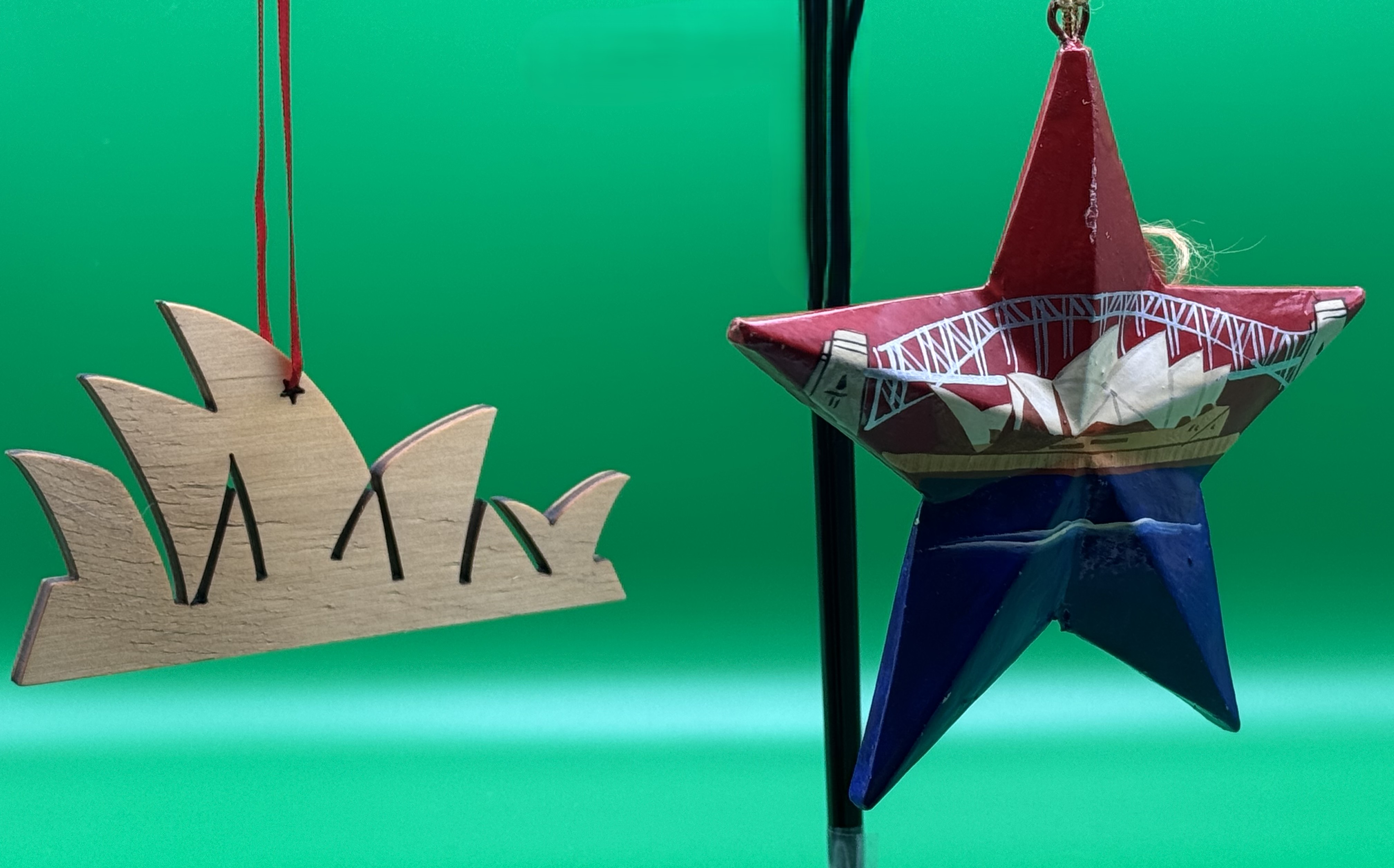
We got these ornaments when we visited our son who lives in Australia. These ones came from our first visit there, when he was living in Sydney. We got to do all sorts of things – visit the Sydney Opera House (one of my favorite buildings in the world), pet a koala, see kangaroos up close, and learn about all the deadly animals and insects that inhabit the Australian continent – there are A LOT. We were stationed in UIjeongbu, South Korea, so Australia wasn’t nearly as far to visit as it is from the US. We made our first visit in 2011. Since then, we have been back several times (not enough) and become acquainted with our two lovely, lively grandsons who live there. I am posting them on the 30th because this year, our son and his family are coming HERE! Today! To San Antonio to spend some time with us and welcome in 2026. What a treat!! We know how l-o-n-g the flight is, and how expensive. We appreciate the effort and are looking forward to seeing these wonderful people who live so very far-away.

December 29th

From the Jell-O Museum, Leroy New York

What? A Jell-O museum? Yup. A Jell-O museum. We encountered this place on a trip we made to Toronto to attend a conference for Layden. At the time, we were stationed at Fort Bragg, North Carolina. We decided it would be fun to explore the East coast so we decided to drive. Along the way, in up-state New York, we encountered a BIG sign welcoming us to Leroy, home of Jell-O, and inviting us to the Jell-O museum. We couldn’t pass that up. It was actually a very informative museum. I learned a lot about that ubiquitous, seemingly un-impressive dish often presented at church picnics and back-yard BB-Q’s. While Jell-O is a rather humble thing, it was also transformative in many ways for middle-class America, allowing any housewife the luxury of serving gelatine dishes, a privilege once reserved for the wealthy who could afford servants to do what was once a very labor intensive process. Here is a link if you want to know more: https://jellogallery.org/ When this ornament goes up on the tree, it reminds us not to underestimate what might seem ordinary or commonplace.

December 28th

Another Dog Tail

This small ceramic ornament is part of the Hallmark ornament collection. We got it because we had a brown dog named Ginger. We got her in Utah, moved her with us to Texas for our first full-time Army assignment, and then to Germany for our next one. She was a friendly, gentle Labrador/Weimaraner mix. Though not as clever as Solomon, she was much wiser. She had a knack for responding to people’s moods and feelings. We knew she was responsive to family, but until an incident in a German hospital, we did not know this extended to others.

Germany is a very dog-friendly country. It is possible to take dogs many places we usually do not in the US. Many restaurants, public transportation, and even hospitals welcome a well-behaved dog. We found this out when Layden got a call requesting a military Chaplain to assist with an American woman who had been admitted to a German hospital. She was not doing well. We had been out on a walk with Ginger and the hospital was nearby, so we headed straight there. Layden got out of the car and the dog tried to follow. A hospital attendant noticed me putting her back in the car and asked if we were there to visit someone . I said yes. She let me know that it would be ok for me to take the dog inside. So, I did. We caught up with Layden who was trying to communicate with the woman. She was unresponsive to his efforts. When Ginger got in the room, she immediately sensed the sadness and promptly laid her head in the woman’s lap. Soon the woman was petting Ginger, and then talking to her, and eventually talking to the Chaplain. We brought the dog on subsequent visits. It made a huge difference in her recovery. After this experience, Layden would take Ginger with him when he made informal visits to soldiers, especially Sunday afternoons when he would visit the barracks. Ginger was a welcome addition for everyone, made many friends, and lifted many spirits. It doesn’t always require a PhD in counseling to have a positive impact on mental/emotional health.

December 27th

A Tale of a Dog & Apples

These paper mache apples covered in a shiny glaze were an after-Christmas purchase – a plastic container of 20 on sale cheap. They look great on the Christmas tree and are perfect for hanging on the lower branches when you have a cat that likes to swat your ornaments. It turns out the dog liked them too. At the time we had a lovely Airedale Terrier by the name of Solomon. Though not often wise, he was very clever. One day I happened to notice one of the apples in his dog bed. I figured he picked it up after the cat swatted it off the tree. I hung it back up. The next day there were two apples in his bed. I hung those up. An hour later they were back. Curious, I positioned myself to be able to see the tree while going relatively unnoticed. Pretty soon, Solomon came over to the tree, chose an apple, put his nose under it, lifted it off the branch and carefully carried it to his bed. Like I said, a clever dog. It became a bit of a ritual – hang the apples, retrieve the apples, hang the apples, retrieve the apples. These are the last few we have left. They are not all as shiny as they once were and they have tooth marks. When we hang them on the tree we think of that dog with great affection.