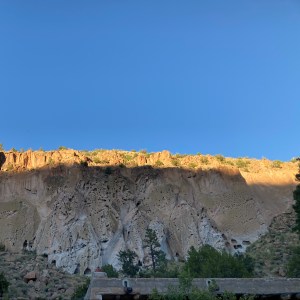

When the park is open for visitors, chatter and laughter combine with bird song and cell phone tones join the rasp and buzz of insects. The shuttle bus arrives every 20 minutes with a hydraulic sigh. A few cars come and go, doors squeak open and shut, and the bear-resistant trash receptacles clatter closed. Other than these sorts of sounds there isn’t a lot of noise in the canyon, so the reverberation of helicopter blades slicing air is unusual.
The helicopter was here to rescue a hiker from the back country. Most people, myself included, don’t think much about what makes national parks relatively safe places to visit. Often over-estimating our capabilities while under-estimating the specific challenges a park may have, we listen with half an ear to information rangers give us. And even if we do listen and we are prepared, accidents and the unexpected can still happen. Lucky for us, there are park rangers who are dedicated to keeping us as safe and secure as possible. Today I had the opportunity to observe the complex management of a rescue operation for a back-country hiker suffering from dehydration, a condition that can cause tiredness, confusion, muscle cramping, poor kidney function, and elevated heart rate. Severe dehydration can lead to shock, low blood pressure, and even death.
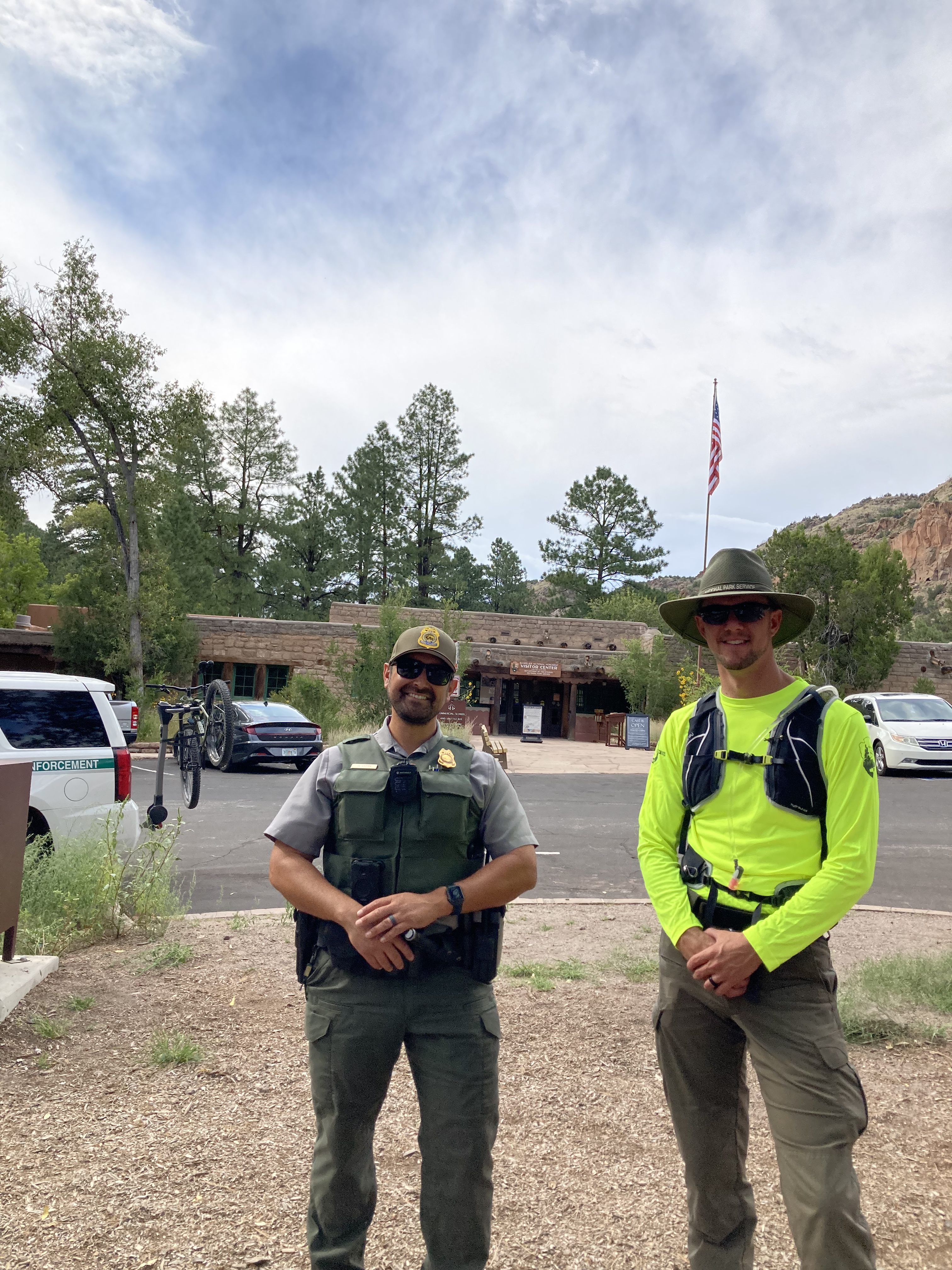
The first indication that something was wrong came via a report from other hikers leaving the back country. This immediately activated the response chain, which involves the law-enforcement segment of the ranger staff. These rangers have training in law enforcement and are all EMT’s. They are armed and can make arrests, but as sworn peace officers, their main responsibility is to help and protect. Because Bandelier is a small park, and located near the city of Los Alamos, the rangers here work in close cooperation with local law and fire departments.
Preparations for the rescue were rapid and well-organized. The Los Alamos fire department dispatched an ambulance and a rescue vehicle. The terrain made it impossible to drive in , so a team was organized to carry medical supplies and a stretcher (litter) up the trail to bring the hiker down.
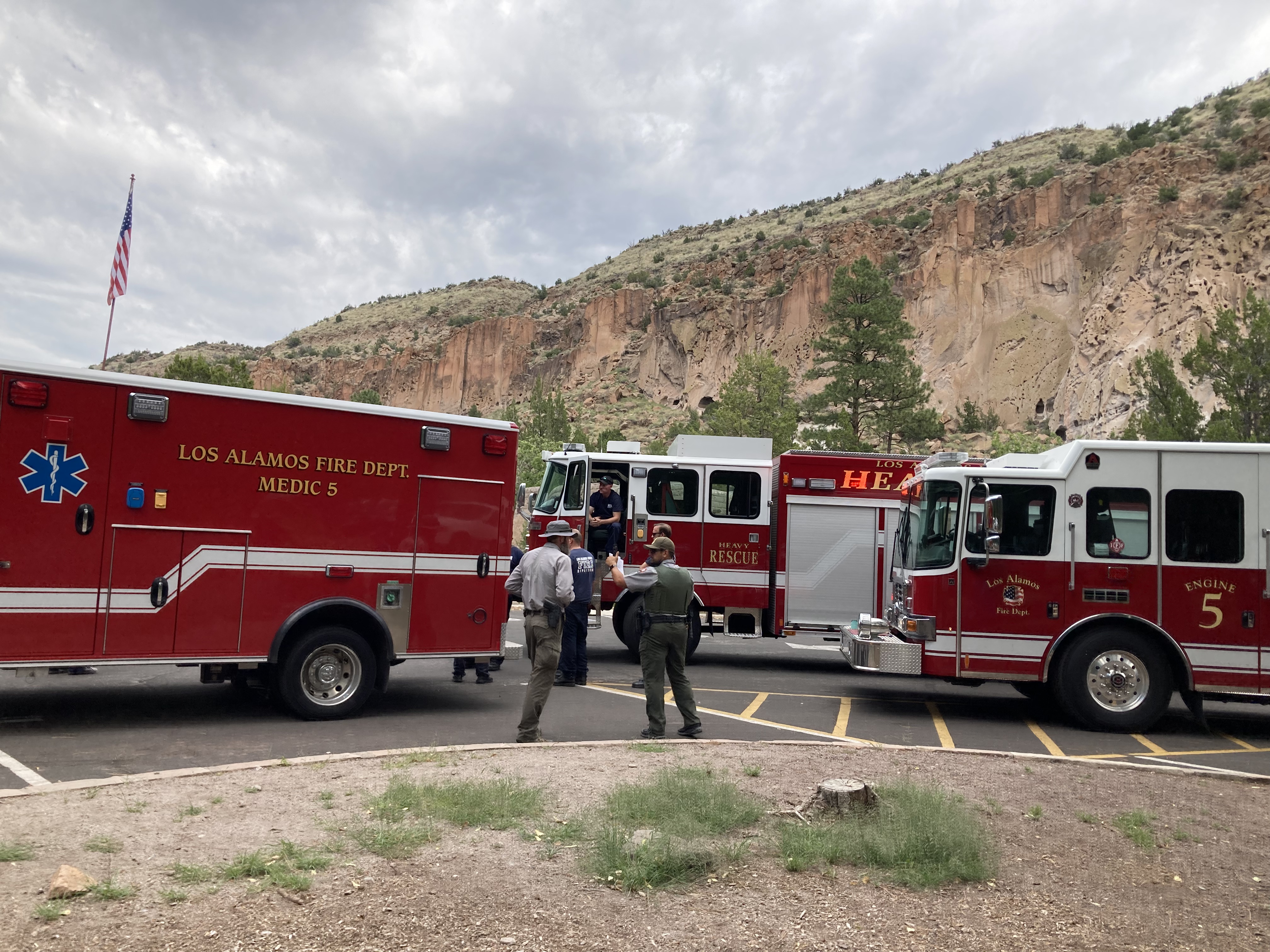
Though I am sure it felt far longer for the person waiting alongside the trail, the team was efficient, reaching the hiker less than three hours after the initial report. In this case, it was determined that a helicopter would be the best way to extract the hiker. Hence the sound of the rotors this afternoon.
Unless they saw the vehicles or the helicopter, most visitors to the park were unaware of the events that unfolded here today. That is usually the case – law enforcement rangers go about their work with as little disruption to normal activities as possible. Rescue operations are only one (dramatic) facet to their jobs. They deal with park vandalism (sad), visitors who don’t pay entrance fees, run stops signs, light fires where they shouldn’t, drink too much, and other violations that pose a danger to the park or to others. They keep visitors, including me, safe and secure during our time at Bandelier. I’m glad they are here!
 Sarah T. Colby